Self-Levelling Epoxy Systems
Seamless, monolithic self-levelling epoxy floors for production halls, showrooms and processing facilities across Accra, Spintex and Kumasi — laid to ICRI CSP over a moisture-tested slab (ASTM F2170/F1869), the discipline that prevents the
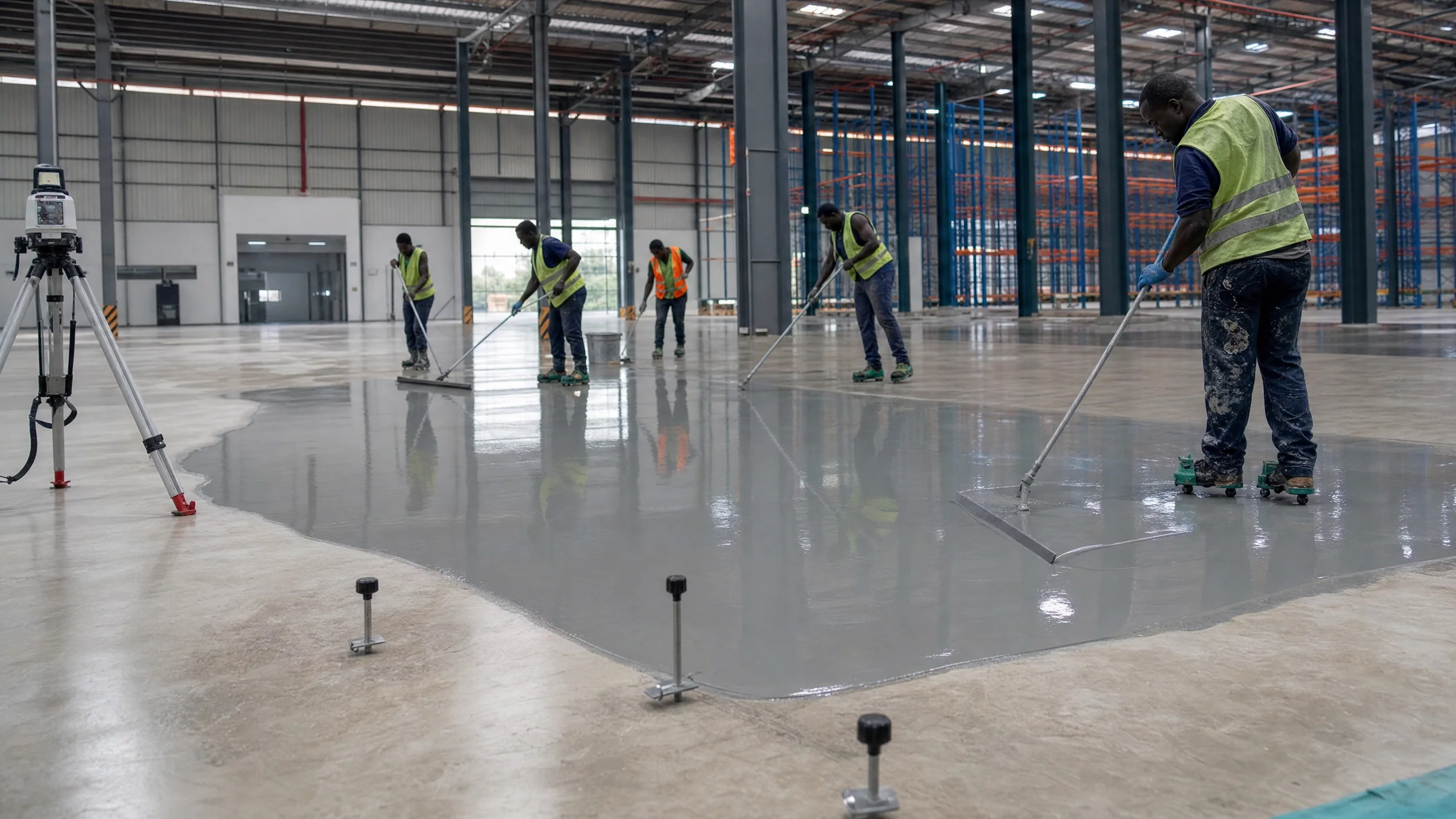
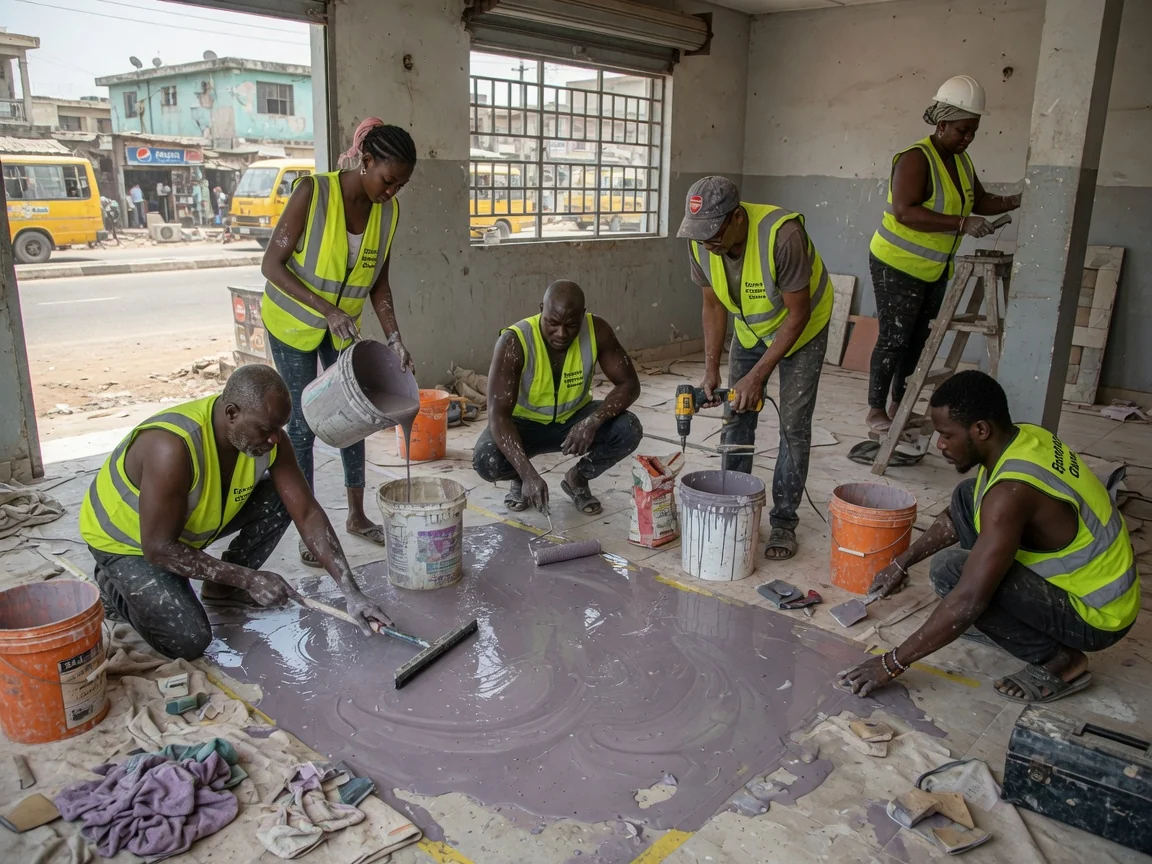
A self-levelling epoxy system is a low-viscosity, two-component resin floor that flows across a prepared slab and cures to a seamless, monolithic, dimensionally flat surface without mechanical screeding. It produces the smooth, jointless, hygienic plane that production halls, showrooms and processing facilities require. In Ghana’s humidity its success is decided beneath the resin — by slab moisture testing and substrate preparation. Epoxy Flooring Ghana has installed self-levelling epoxy across Accra, Spintex and Kumasi since 1981.
Why Most Self-Levelling Epoxy Floors Fail in Ghana — and How We Prevent It
The epoxy itself rarely fails; the slab beneath it does. In Ghana’s persistent 81–83% relative humidity, moisture vapour rising through a concrete slab builds osmotic and hydrostatic pressure under the seamless film and lifts it — pinholing, blistering, delamination and peeling within months. Because a self-levelling floor is a continuous monolithic membrane, a single moisture-driven blister telegraphs across a wide area. It is the single most common epoxy failure in the country, and almost every failed floor skipped one step: slab moisture testing before the resin was poured.
We treat moisture as the primary engineering control. Before a drop of resin is mixed we test in-situ relative humidity to ASTM F2170 and moisture-vapour emission to ASTM F1869, and prime to the reading. That discipline — not the brand of resin — is what makes a seamless floor last in this climate.
Self-Levelling Epoxy Systems We Install in Accra & Kumasi
Standard Self-Levelling Epoxy
A smooth, seamless monolithic surface for production, assembly and commercial floors — easy to clean, chemical-resistant and built to a defined film thickness for general manufacturing and retail spaces.
Hygienic / Coved Self-Levelling Epoxy
A seamless flow-applied floor carried up the wall as a coved skirting for food, beverage and pharmaceutical areas where there must be no dirt-trapping joint between floor and wall.
Decorative Self-Levelling Epoxy
A pigmented or flake-broadcast seamless finish for showrooms, retail and commercial interiors where the floor is part of the brand presentation as well as a working surface.
Flatness-Corrected Self-Levelling Epoxy
A build-up system that brings an undulating or worn slab back to a flat plane before the seamless topcoat, where the existing concrete is out of tolerance.
The Moisture-Testing Doctrine
| Test | What it measures | Why it decides the floor |
|---|---|---|
| ASTM F2170 | In-situ relative humidity (probes at 40% slab depth) | The dominant pre-install moisture test; the resin system and primer are chosen to this reading |
| ASTM F1869 | Calcium-chloride moisture-vapour emission rate | Surface vapour load; flags slabs that need a vapour-suppression primer |
| ICRI CSP | Concrete surface profile after preparation | The mechanical key the resin bonds to — concrete uses ICRI CSP, not the steel-only ISO 8501 |
How We Install a Self-Levelling Epoxy Floor
- Slab moisture & substrate testing — ASTM F2170 in-situ RH + ASTM F1869 MVER before anything else.
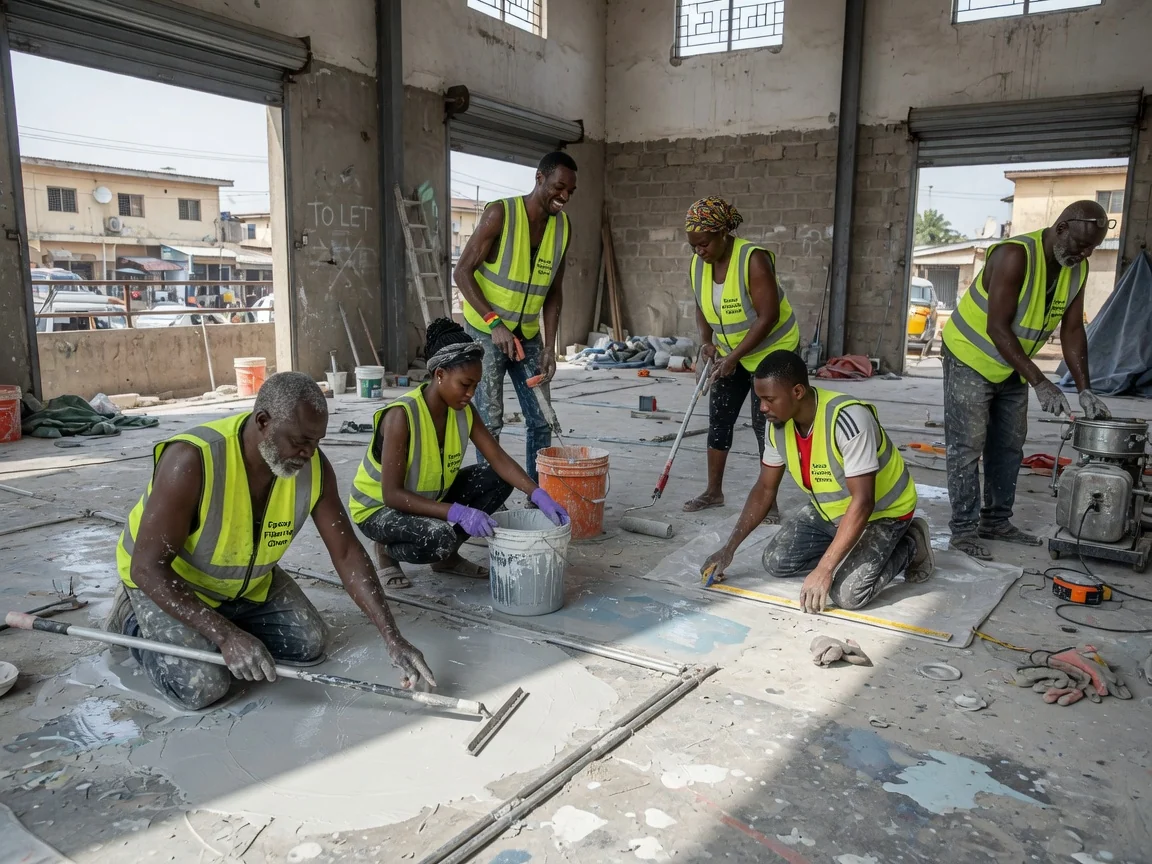
- Surface preparation — diamond grinding / shot-blasting to the specified ICRI CSP (CSP 2–3 for a flow-applied system); cracks and low spots filled.
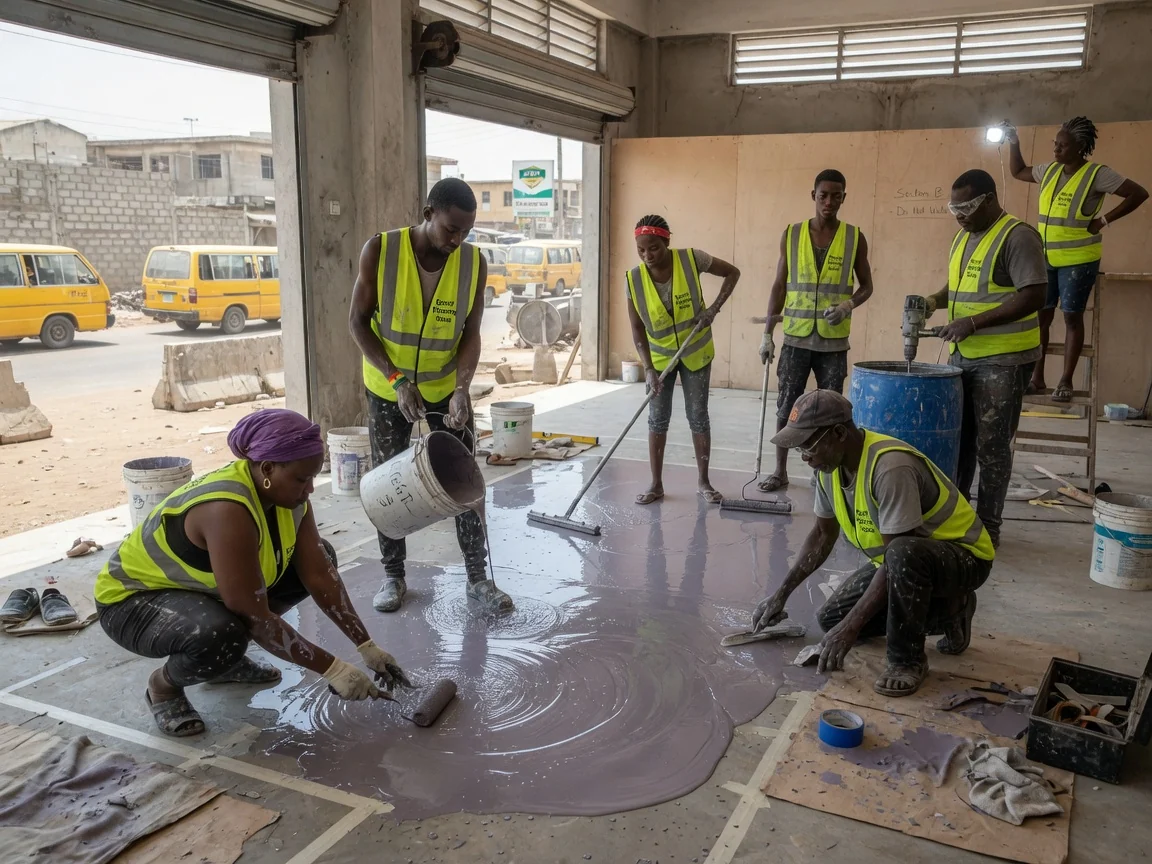
- Priming & self-levelling pour — moisture-tolerant primer to the reading, then the batch-mixed resin poured to the correct film build and spike-rolled to release air.
- Verification & handover — adhesion (ASTM D3359), abrasion resistance (ASTM D4060), signed QC report.
Comparing Seamless Floor Systems for Ghana’s Climate
| System | Best for | Lifespan | Moisture tolerance |
|---|---|---|---|
| Standard self-levelling epoxy | Production, assembly, commercial | 10–15+ yrs | High when slab is tested & primed |
| Hygienic / coved self-levelling | Food, beverage, pharma | 10–15+ yrs | High; seamless coved detail |
| Decorative self-levelling | Showrooms, retail, offices | 10–15+ yrs | High when slab is tested & primed |
| Broadcast / mortar epoxy | Warehouses, forklift traffic | 12–20 yrs | High; thicker aggregate body |
What Affects the Cost
- The film build and whether a hygienic, decorative or flatness-corrected variant is specified
- Slab condition and any moisture remediation, crack repair or levelling required
- Area (m²), access, and whether the facility stays operational during works
- Chemical resistance, finish and any coved detailing specified
Every quote follows a site survey and slab moisture test — no fixed rate is given before the slab is tested.
Applications Across Southern Ghana
- Production and assembly halls across Spintex, the Accra industrial corridor and Kumasi
- Food, beverage and pharmaceutical processing floors requiring seamless, coved, hygienic systems
- Showrooms, retail and commercial interiors requiring a smooth, decorative seamless finish
- Light-traffic logistics and packing areas
- Production facilities in the Tema Industrial Area and the Airport City business precinct
Areas We Serve
Epoxy Flooring Ghana installs self-levelling epoxy across Accra metro, Spintex, the North Industrial Area and Greater Accra — plus Kumasi and Takoradi.
Related Services
- Industrial Epoxy Floor Coatings — heavy-duty broadcast and mortar systems
- Decorative Metallic Epoxy — 3D and metallic seamless showroom finishes
- Hygienic Epoxy for Food & Pharma — seamless, coved, wash-down-rated systems
- Polyurethane Topcoat Systems — UV-stable, chemical-resistant sealing coats
Frequently Asked Questions
Why do self-levelling epoxy floors blister or peel in Ghana? Almost always slab moisture. In Ghana’s 81–83% humidity, trapped vapour under the seamless resin builds osmotic and hydrostatic pressure and lifts it — pinholing, blistering and disbondment. The fix is to test in-situ RH (ASTM F2170) and moisture-vapour emission (ASTM F1869) before pouring and prime to the reading — which most failed floors skipped.
What is a self-levelling epoxy floor used for? For smooth, seamless, easy-to-clean production and showroom floors — assembly halls, food and pharmaceutical processing areas, retail and commercial spaces — where a flat, jointless, hygienic surface is the requirement and traffic is foot and light wheeled rather than heavy forklift.
How long does a self-levelling epoxy floor last in Ghana? A correctly specified system over a moisture-tested, properly prepared slab lasts 10–15+ years; the variable is almost never the resin — it is the substrate preparation and moisture control beneath it.
How much does a self-levelling epoxy floor cost? It is quoted on survey — cost varies with the film build, slab condition and moisture remediation, flatness correction, area and access. We never give a fixed rate before testing the slab; request a site survey.