Systèmes Époxy Autolissants
Sols époxy autolissants sans joint et monolithiques pour halls de production, showrooms et sites de transformation à Accra, Spintex et Kumasi — coulés selon l'ICRI CSP sur une dalle testée pour l'humidité (ASTM F2170/F1869), la discipline qui prévient la première cause d'échec de l'époxy dans l'humidité du Ghana. Epoxy Flooring Ghana, depuis 1981.
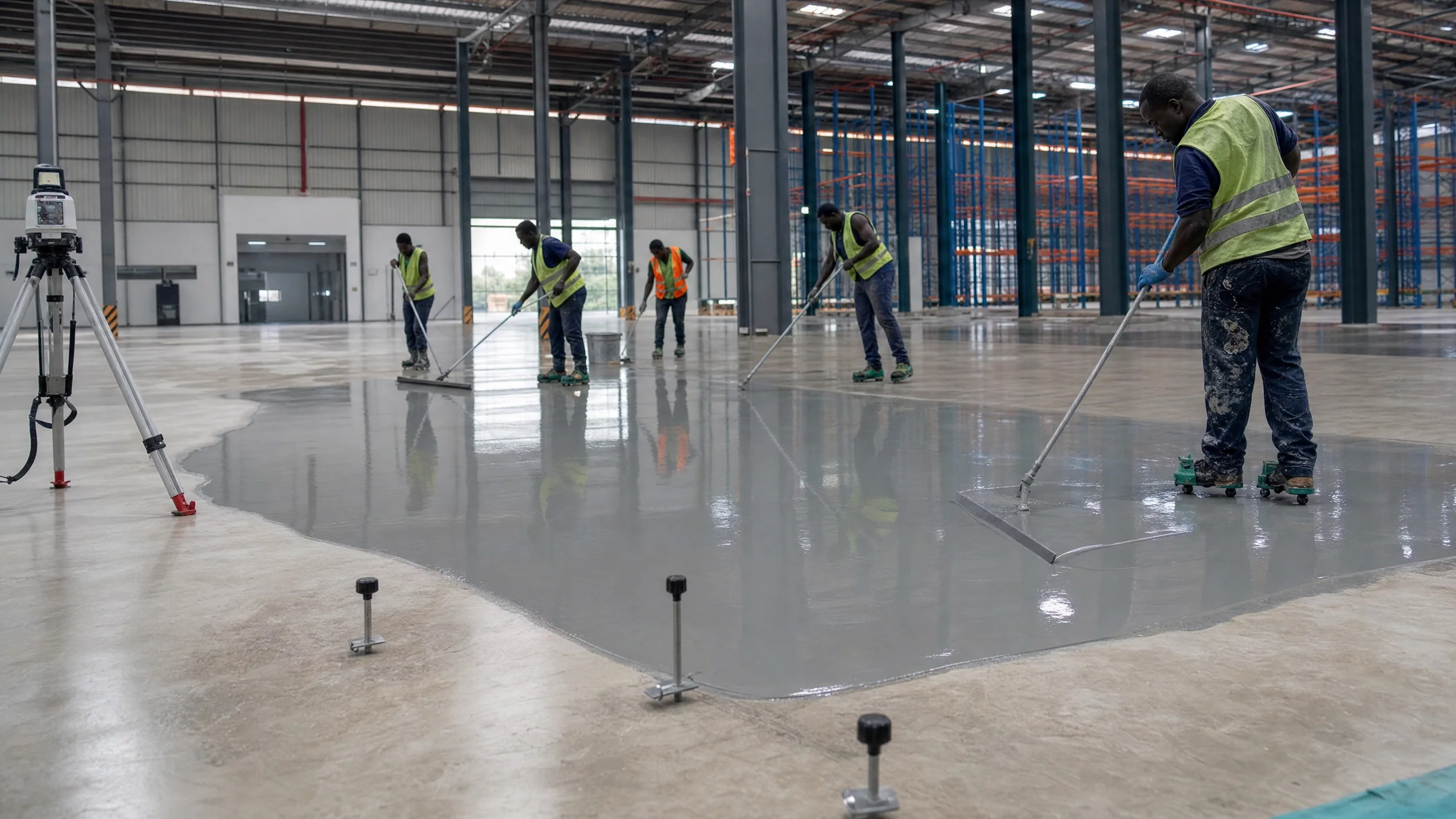
Un système époxy autolissant est un sol en résine bicomposante à faible viscosité qui s’étale sur une dalle préparée et durcit en une surface sans joint, monolithique et plane sans lissage mécanique. Il produit le plan lisse, sans joint et hygiénique qu’exigent les halls de production, les showrooms et les sites de transformation. Dans l’humidité du Ghana, sa réussite se joue sous la résine — par le test d’humidité de la dalle et la préparation du support. Epoxy Flooring Ghana pose de l’époxy autolissant à Accra, Spintex et Kumasi depuis 1981.
Pourquoi la plupart des sols époxy autolissants échouent au Ghana — et comment nous l’évitons
Ce n’est presque jamais l’époxy qui cède ; c’est la dalle en dessous. Dans l’humidité relative persistante de 81 à 83 % du Ghana, la vapeur d’eau qui remonte à travers une dalle de béton développe une pression osmotique et hydrostatique sous le film sans joint et le soulève — microbullage, cloquage, délamination et décollement en quelques mois. Comme un sol autolissant est une membrane monolithique continue, une seule cloque d’humidité se propage sur une large zone. C’est l’échec de l’époxy le plus courant du pays, et presque tous les sols défaillants ont sauté une étape : le test d’humidité de la dalle avant la coulée de la résine.
Nous traitons l’humidité comme le contrôle d’ingénierie primaire. Avant qu’une goutte de résine ne soit mélangée, nous mesurons l’humidité relative in situ selon ASTM F2170 et l’émission de vapeur d’eau selon ASTM F1869, et nous appliquons le primaire selon le relevé. Cette discipline — et non la marque de la résine — est ce qui fait durer un sol sans joint sous ce climat.
Les systèmes époxy autolissants que nous posons à Accra et Kumasi
Époxy autolissant standard
Une surface lisse, sans joint et monolithique pour les sols de production, d’assemblage et de commerce — facile à nettoyer, résistante aux produits chimiques et montée à une épaisseur de film définie pour la fabrication générale et les espaces de vente.
Époxy autolissant hygiénique / à plinthes à gorge
Un sol sans joint coulé et relevé en plinthe à gorge le long du mur pour les zones agroalimentaires, de boisson et pharmaceutiques où aucun joint piège-saleté ne doit subsister entre le sol et le mur.
Époxy autolissant décoratif
Une finition sans joint pigmentée ou à paillettes saupoudrées pour les showrooms, les commerces et les intérieurs où le sol fait partie de la présentation de la marque autant qu’il est une surface de travail.
Époxy autolissant à correction de planéité
Un système de ragréage qui ramène une dalle ondulée ou usée à un plan de niveau avant la couche sans joint, lorsque le béton existant est hors tolérance.
La doctrine du test d’humidité
| Test | Ce qu’il mesure | Pourquoi il décide du sol |
|---|---|---|
| ASTM F2170 | Humidité relative in situ (sondes à 40 % de la profondeur de la dalle) | Le test d’humidité dominant avant pose ; le système de résine et le primaire sont choisis selon ce relevé |
| ASTM F1869 | Taux d’émission de vapeur d’eau au chlorure de calcium | Charge de vapeur en surface ; signale les dalles nécessitant un primaire de suppression de vapeur |
| ICRI CSP | Profil de surface du béton après préparation | L’ancrage mécanique auquel la résine adhère — le béton utilise l’ICRI CSP, et non l’ISO 8501 réservé à l’acier |
Comment nous posons un sol époxy autolissant
- Test d’humidité de la dalle et du support — humidité relative in situ ASTM F2170 + émission de vapeur ASTM F1869 avant toute chose.
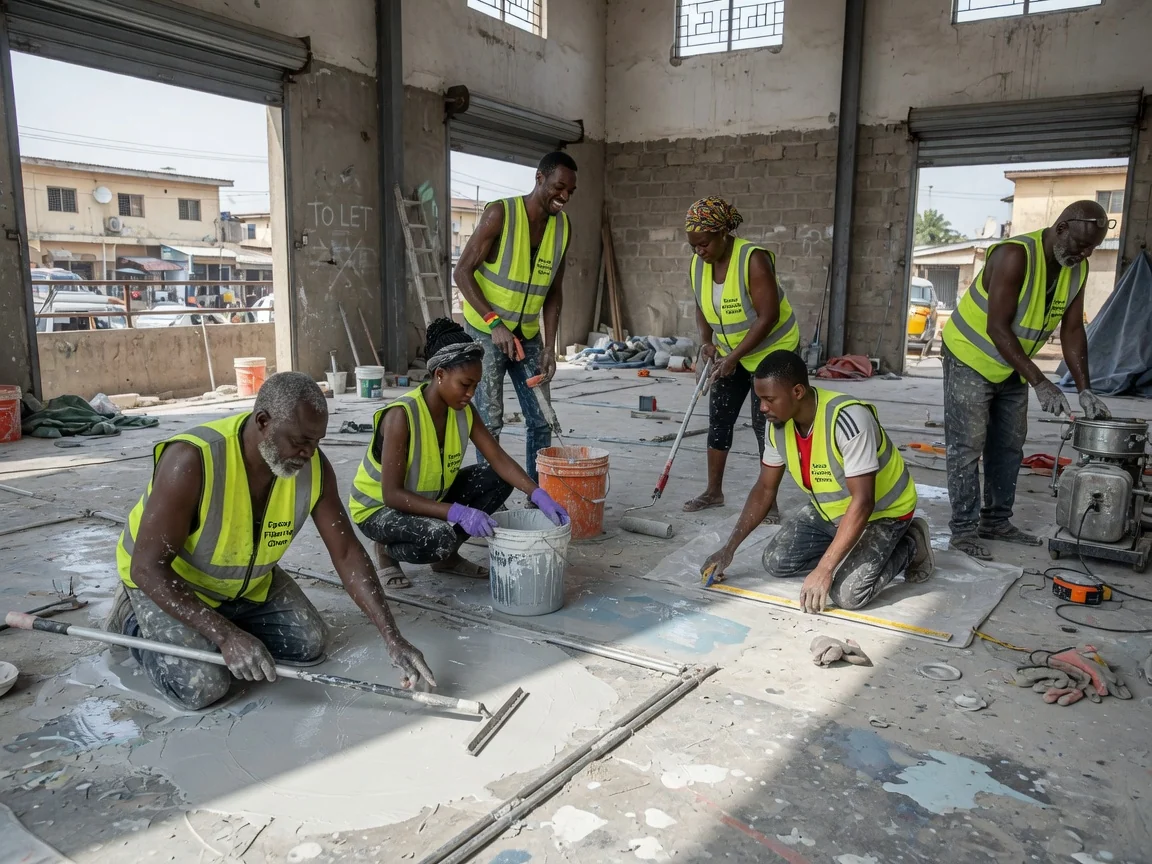
- Préparation de surface — ponçage diamant / grenaillage au profil ICRI CSP spécifié (CSP 2 à 3 pour un système coulé) ; fissures et points bas comblés.
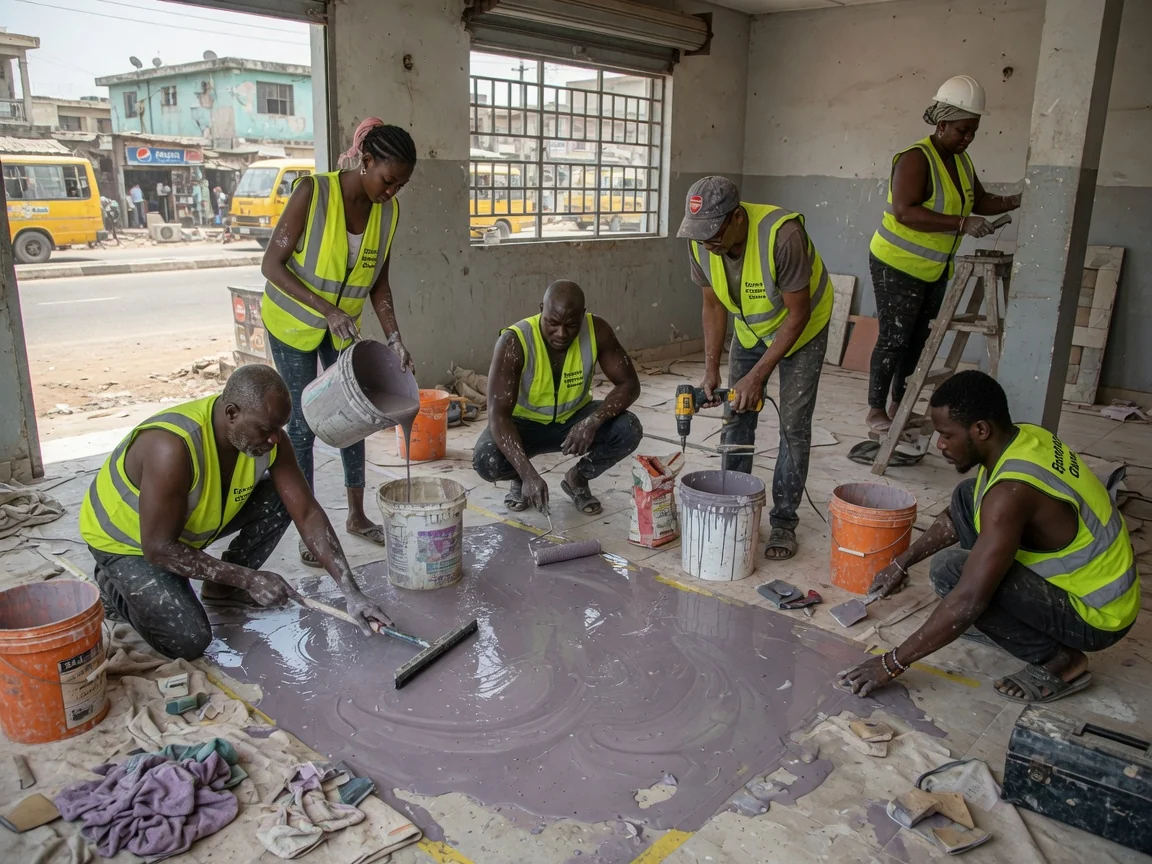
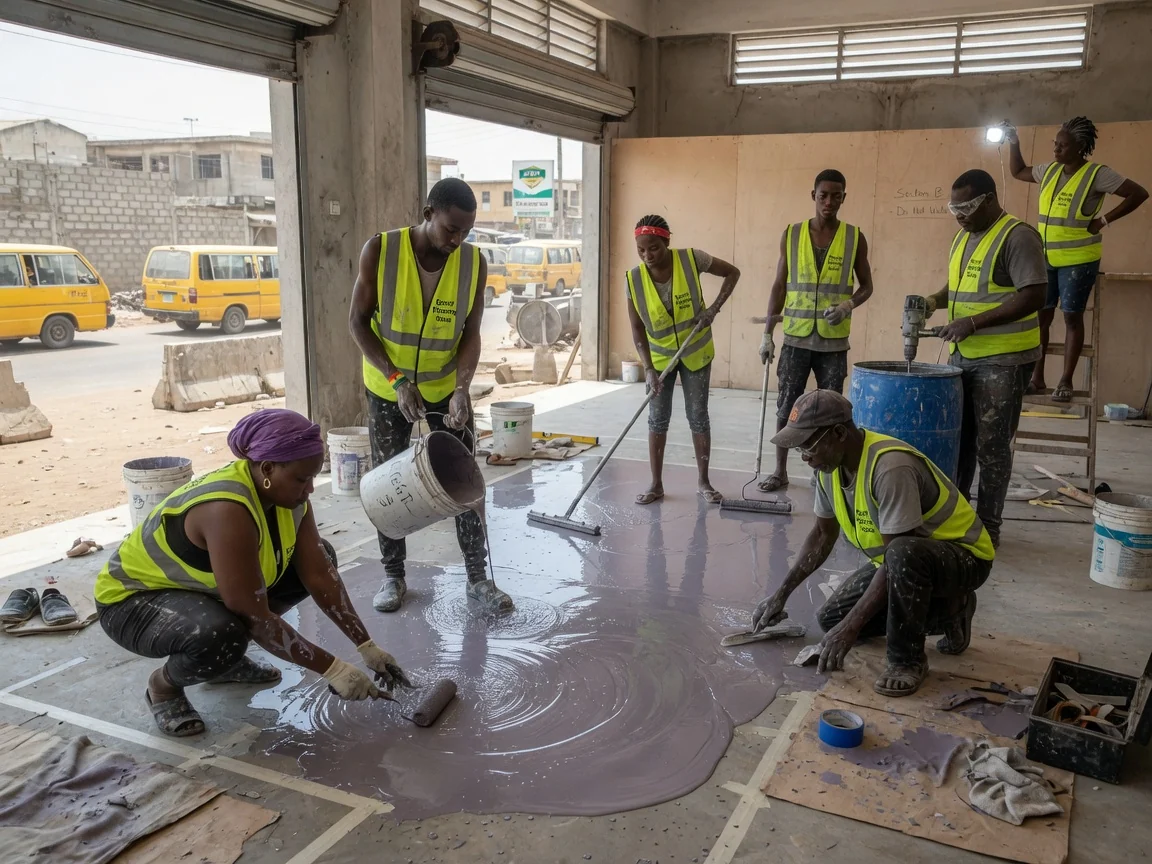
- Primaire et coulée autolissante — primaire tolérant à l’humidité selon le relevé, puis la résine mélangée par gâchée et coulée à l’épaisseur de film correcte, débullée au rouleau.
- Vérification et réception — adhérence (ASTM D3359), résistance à l’abrasion (ASTM D4060), rapport qualité signé.
Comparaison des systèmes de sols sans joint pour le climat du Ghana
| Système | Idéal pour | Durée de vie | Tolérance à l’humidité |
|---|---|---|---|
| Époxy autolissant standard | Production, assemblage, commerce | 10 à 15 ans et + | Élevée si la dalle est testée et primarisée |
| Autolissant hygiénique / à gorge | Agroalimentaire, boisson, pharma | 10 à 15 ans et + | Élevée ; détail de plinthe à gorge sans joint |
| Autolissant décoratif | Showrooms, commerce, bureaux | 10 à 15 ans et + | Élevée si la dalle est testée et primarisée |
| Époxy à charge / mortier | Entrepôts, trafic de chariots | 12 à 20 ans | Élevée ; corps d’agrégat plus épais |
Ce qui influe sur le coût
- L’épaisseur de film et le choix d’une variante hygiénique, décorative ou à correction de planéité
- L’état de la dalle et toute remédiation d’humidité, réparation de fissures ou ragréage requis
- La surface (m²), l’accès et le maintien ou non de l’exploitation pendant les travaux
- La résistance chimique, la finition et tout relevé de plinthe à gorge spécifié
Chaque devis suit une visite technique et un test d’humidité de la dalle — aucun tarif fixe n’est donné avant que la dalle ne soit testée.
Applications à travers le sud du Ghana
- Halls de production et d’assemblage à Spintex, dans le corridor industriel d’Accra et à Kumasi
- Sols de transformation agroalimentaire, de boisson et pharmaceutique exigeant des systèmes sans joint, à gorge et hygiéniques
- Showrooms, commerces et intérieurs exigeant une finition lisse, décorative et sans joint
- Zones logistiques et de conditionnement à trafic léger
- Sites de production dans la zone franche de Tema et le corridor industriel d’Accra
Les zones que nous desservons
Epoxy Flooring Ghana pose de l’époxy autolissant à travers le Grand Accra, Spintex, la North Industrial Area — ainsi qu’à Kumasi et Takoradi.
Services connexes
- Revêtements Époxy de Sol Industriels — systèmes lourds à charge et à mortier
- Époxy Métallisé Décoratif — finitions de showroom 3D et métallisées sans joint
- Époxy Hygiénique Agroalimentaire et Pharma — systèmes sans joint, à plinthes à gorge et lavables
- Systèmes de Finition Polyuréthane — couches de scellement stables aux UV et résistantes aux produits chimiques
Foire aux questions
Pourquoi les sols époxy autolissants cloquent-ils ou se décollent-ils au Ghana ? Presque toujours à cause de l’humidité de la dalle. Dans l’humidité de 81 à 83 % du Ghana, la vapeur piégée sous la résine sans joint développe une pression osmotique et hydrostatique qui la soulève — microbullage, cloquage et décollement. La solution consiste à mesurer l’humidité relative in situ (ASTM F2170) et l’émission de vapeur (ASTM F1869) avant la coulée et à appliquer le primaire selon le relevé — ce que la plupart des sols défaillants ont omis.
À quoi sert un sol époxy autolissant ? À des sols de production et de showroom lisses, sans joint et faciles à nettoyer — halls d’assemblage, zones de transformation agroalimentaire et pharmaceutique, espaces commerciaux et de vente — là où une surface plane, sans joint et hygiénique est l’exigence et où le trafic est piéton et léger plutôt qu’à chariots lourds.
Combien de temps dure un sol époxy autolissant au Ghana ? Un système correctement spécifié sur une dalle testée pour l’humidité et bien préparée dure 10 à 15 ans et plus ; la variable n’est presque jamais la résine — c’est la préparation du support et la maîtrise de l’humidité en dessous.
Combien coûte un sol époxy autolissant ? Le prix est établi après visite — il varie selon l’épaisseur de film, l’état de la dalle et la remédiation d’humidité, la correction de planéité, la surface et l’accès. Nous ne donnons jamais de tarif fixe avant d’avoir testé la dalle ; demandez une visite technique.