Concrete Repair & Substrate Preparation
Crack and spall repair, ICRI CSP profiling and moisture remediation in Accra & Tema — the substrate engineering that decides whether a floor coating lasts or fails, with slab moisture testing (ASTM F2170/F1869) that prevents the
Concrete repair and substrate preparation is the foundational engineering discipline that decides whether a floor coating lasts for years or fails within months. Before any epoxy, polyurethane or MMA system commits to a slab, the concrete must be sound, moisture-tested, contamination-free and profiled to the correct ICRI Concrete Surface Profile (CSP). In Ghana’s humidity this groundwork is not optional — it is where the floor’s longevity is decided. Epoxy Flooring Ghana has prepared and repaired concrete substrates across Accra and Tema since 1981.
Why Floors Fail in Ghana — and Why Prep Is the Cure
Across the empire’s flooring brands one truth repeats: the epoxy rarely fails; the slab beneath it does. In Ghana’s persistent 81–83% relative humidity, moisture vapour rising through an untested concrete slab builds osmotic and hydrostatic pressure under the resin and lifts it — blistering, delamination and peeling within months. Add laitance, oil contamination, carbonation and unrepaired cracks, and even the best coating is doomed before it is poured.
Substrate preparation is the cure, and moisture testing is its first move. Before any repair or coating we test in-situ relative humidity to ASTM F2170 and moisture-vapour emission to ASTM F1869, and we profile the slab to the specified ICRI CSP. This is the foundation every other floor we install depends on — and the step that most failed floors in the country skipped.
Substrate Services We Provide in Accra & Tema
Crack & Spall Repair
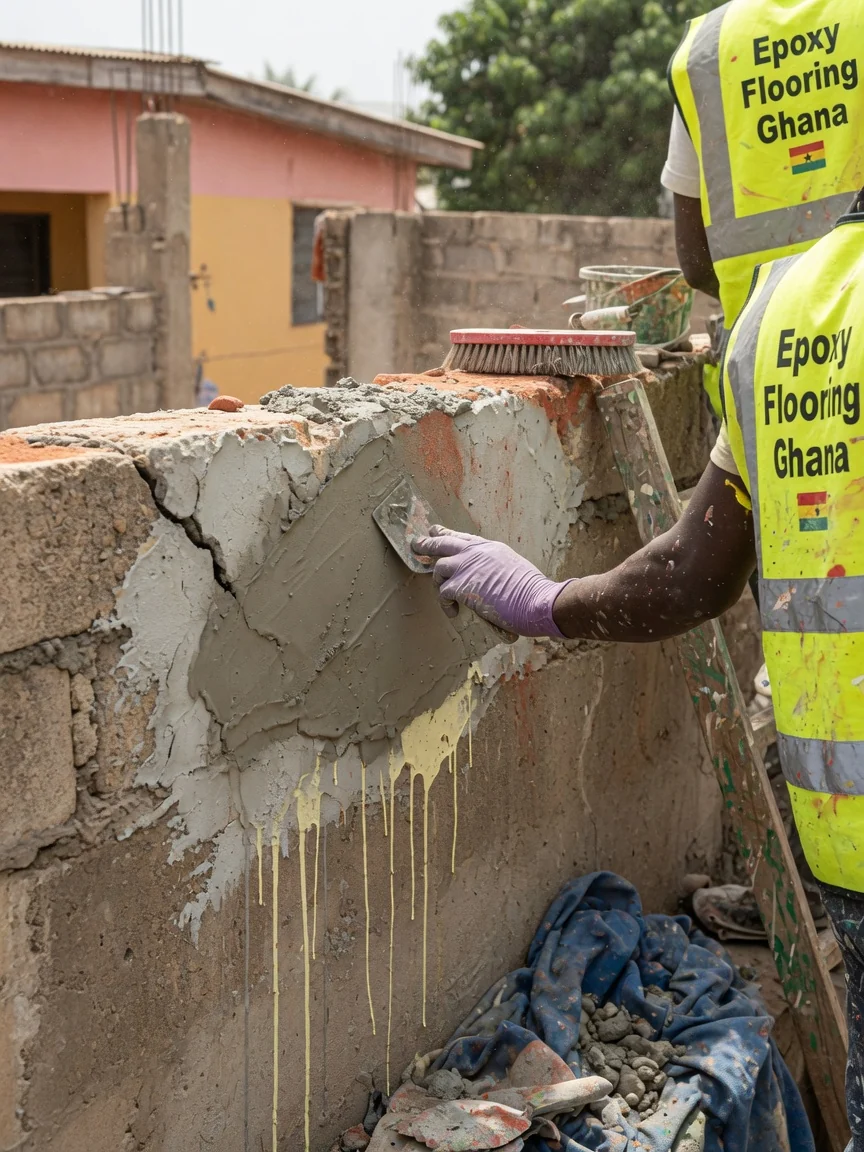
Cracks, spalls and delaminated zones are routed and rebuilt with repair mortars and structural resins matched to or exceeding the host concrete’s compressive strength, restoring a continuous, load-bearing base.
ICRI CSP Profiling
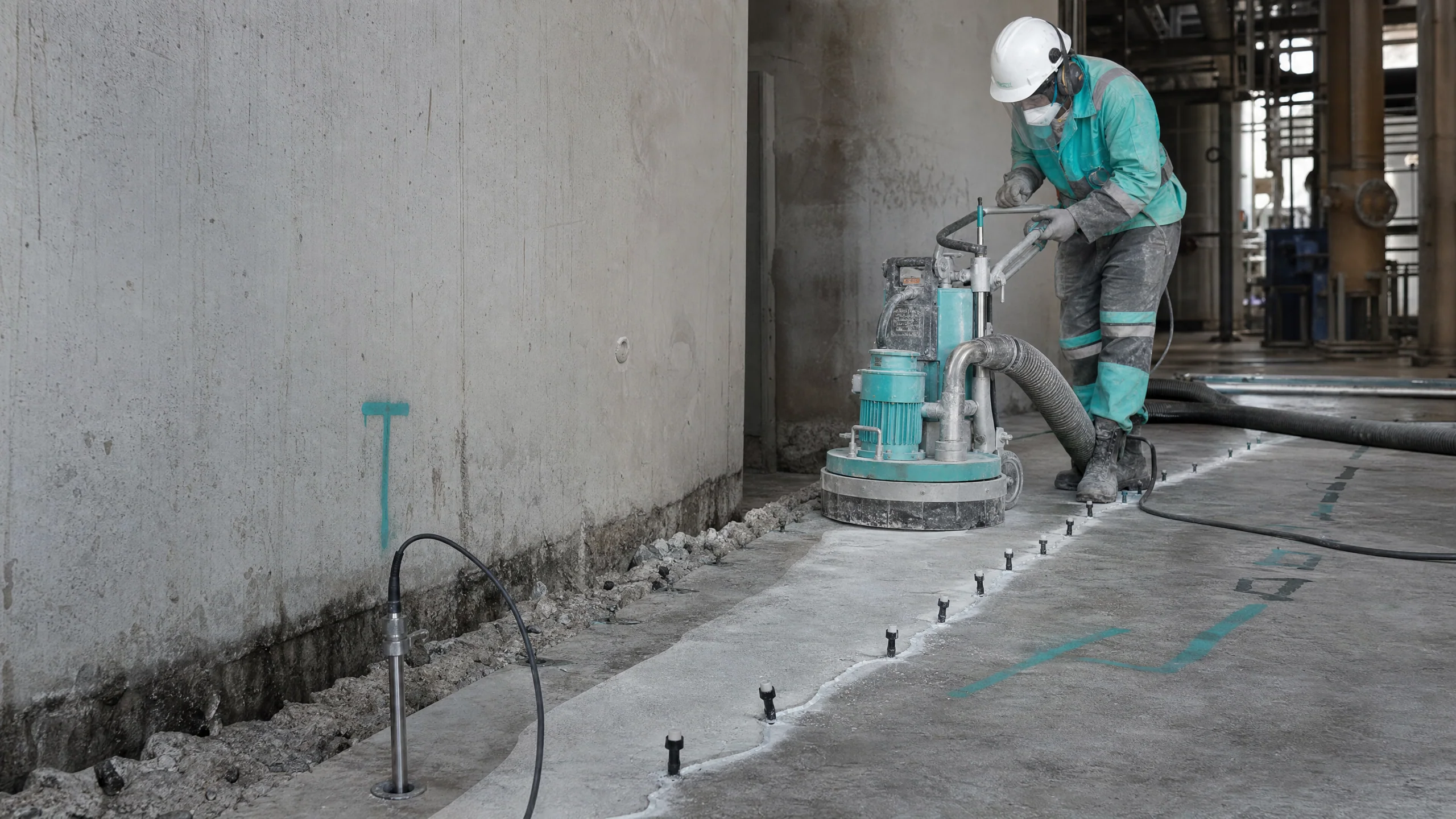
Diamond grinding and captive shot-blasting establish the specified ICRI CSP — typically CSP 3–5 for epoxy — removing laitance, sealers and curing compounds so the resin keys mechanically rather than merely sitting on the surface.
Moisture Remediation
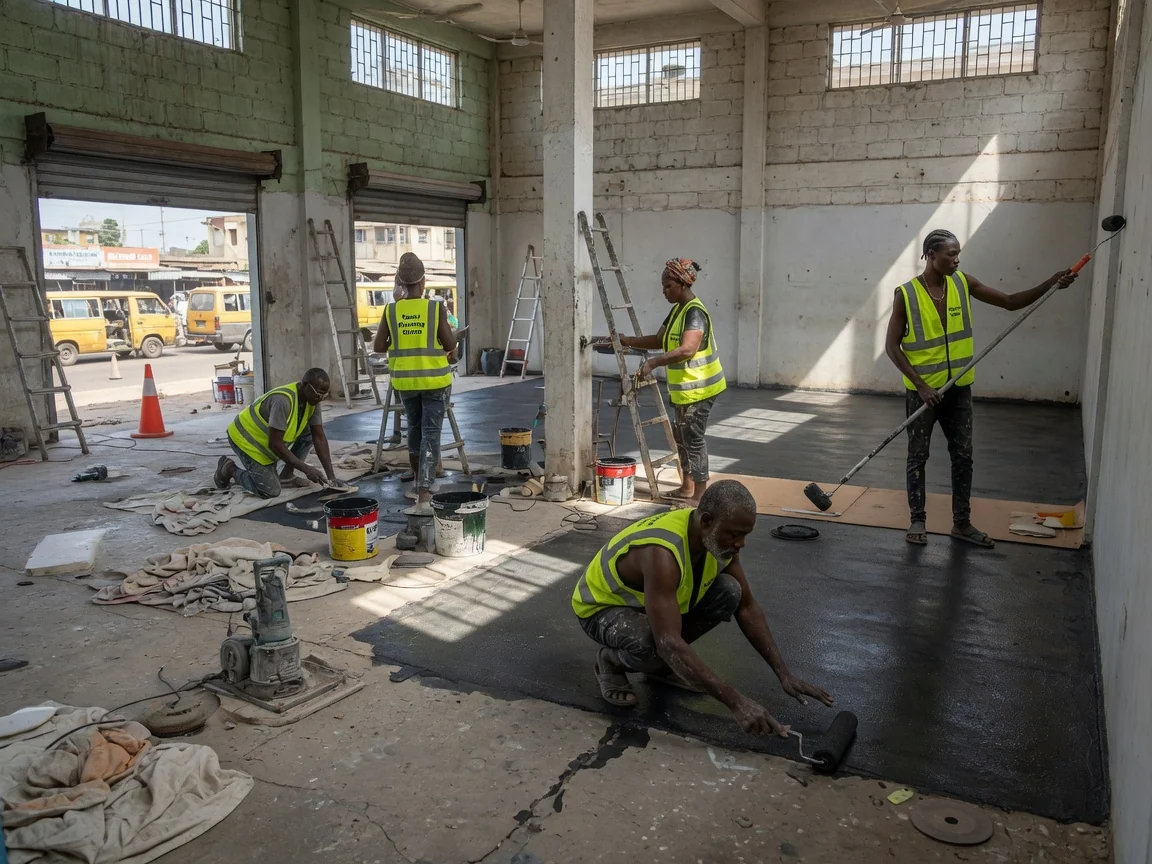
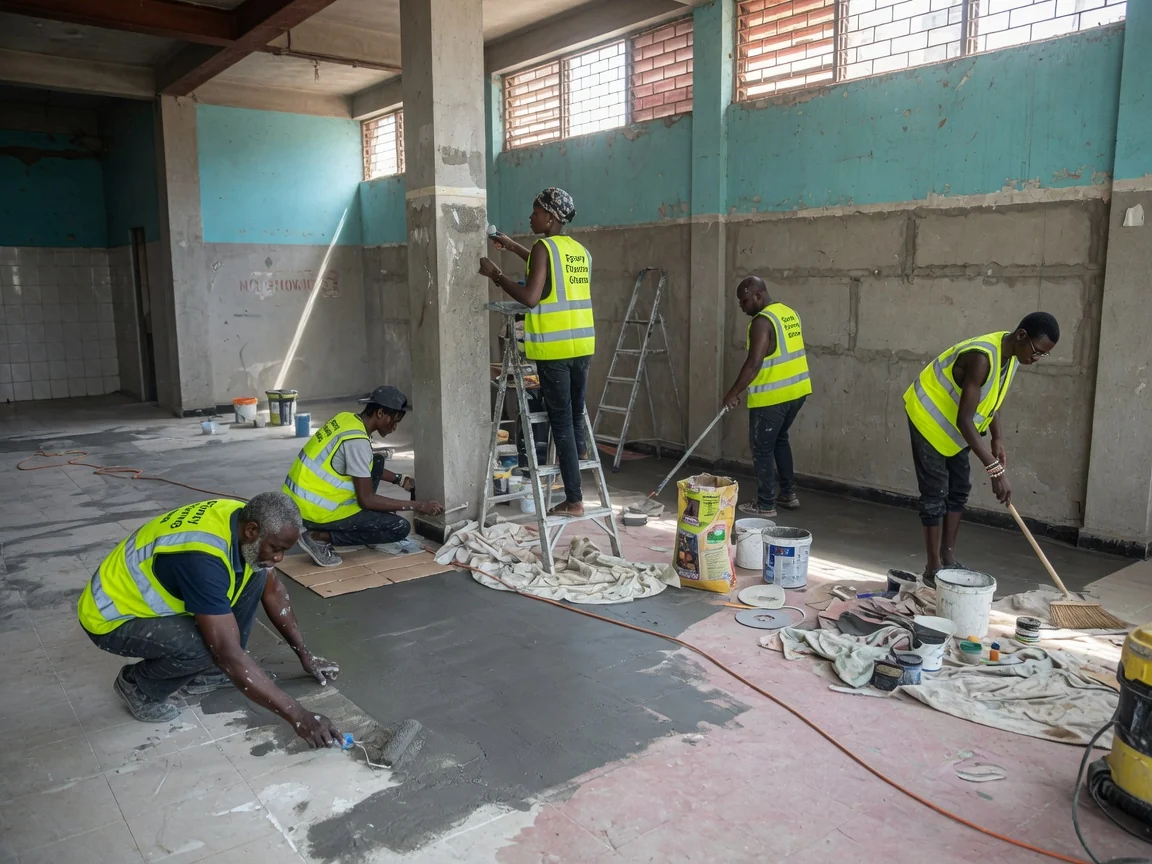
Where ASTM F2170/F1869 readings exceed coating thresholds, a moisture-suppression primer is specified and applied to the reading, sealing vapour transmission before the coating programme begins.
Contamination & Laitance Removal
Oils, form-release compounds, carbonation and failing prior coatings are mechanically removed under dust-controlled extraction so the new system bonds to clean, sound concrete.
Standards That Govern Substrate Preparation
| Standard | What it governs | Why it decides the floor |
|---|---|---|
| ASTM F2170 | In-situ relative humidity (probes at 40% slab depth) | The dominant pre-install moisture test; the primer and remediation are chosen to this reading |
| ASTM F1869 | Calcium-chloride moisture-vapour emission rate | Surface vapour load; flags slabs needing a vapour-suppression primer |
| ICRI CSP | Concrete surface profile after preparation | The mechanical key the resin bonds to — concrete uses ICRI CSP, not the steel-only ISO 8501 |
| ASTM D3359 | Adhesion (cross-cut / crosshatch tape) | Confirms the prepared surface gives the bond the coating specification requires |
| ASTM C267 | Chemical resistance of the repair/system | Confirms repair materials resist the exposure the finished floor will see |
How We Prepare a Concrete Substrate
- Slab moisture & diagnostic survey — ASTM F2170 in-situ RH + ASTM F1869 MVER, with hardness and adhesion checks, before anything else.
- Defect mapping & crack/spall repair — defects mapped and rebuilt with strength-matched mortars and resins.
- Mechanical surface preparation — diamond grinding / captive shot-blasting to the specified ICRI CSP (typically CSP 3–5), under dust-controlled extraction.
- Moisture remediation, priming & verification — moisture-suppression primer to the reading; adhesion (ASTM D3359) re-checked; substrate-preparation certificate issued.
Comparing Preparation Methods for Ghana’s Slabs
| Method | Best for | Result | When specified |
|---|---|---|---|
| Diamond grinding | Smooth slabs, thin coatings, decorative | CSP 1–3 profile | Self-levelling and decorative systems |
| Captive shot-blasting | Industrial slabs, heavy build | CSP 3–5 profile | Broadcast, mortar and heavy-duty epoxy |
| Scarifying / routing | Crack and joint detailing, laitance | Localised correction | Defect repair and joint preparation |
| Moisture-suppression priming | High-RH slabs (ASTM F2170/F1869) | Sealed vapour transmission | Any slab over the coating threshold |
What Affects the Cost
- Slab condition and the extent of crack, spall and delamination repair required
- The moisture remediation needed once ASTM F2170/F1869 readings are in
- The ICRI CSP specified and the preparation method (grinding vs shot-blasting) to achieve it
- Area (m²), access, dust-control requirements, and whether the facility stays operational
Every quote follows a site survey and slab moisture test — no fixed rate is given before the slab is tested.
Applications Across Southern Ghana
- New-build slabs needing cure, laitance and form-release correction before first coating across Accra and Spintex
- Refurbishment of failed or contaminated floors in the Tema industrial area and North Industrial Area
- Moisture remediation for warehouse, food, pharma and showroom slabs ahead of resin systems
- Crack and spall repair for logistics and forklift-traffic floors under daily load
- Substrate preparation for industrial and commercial projects in Kumasi and Takoradi
Areas We Serve
Epoxy Flooring Ghana prepares and repairs concrete substrates across Accra metro, Spintex, and the Tema industrial area — plus Kumasi and Takoradi.
Related Services
- Industrial Epoxy Floor Coatings — the heavy-duty systems a prepared slab carries
- Self-Levelling Epoxy Systems — smooth monolithic floors that demand a true, prepared base
- Decorative Metallic Epoxy — showpiece floors that fail without a moisture-tested slab
- Hygienic Epoxy for Food & Pharma — audit-grade floors built on a sealed, profiled substrate
Frequently Asked Questions
Why does substrate preparation matter so much for an epoxy floor? Because the resin almost never fails — the slab beneath it does. A coating is only as durable as the base it bonds to: an untested, unprepared slab carries moisture, laitance and contamination that lift even the best resin. Slab moisture testing (ASTM F2170/F1869) and ICRI CSP profiling are the foundation every floor in Ghana’s humidity depends on, and the step most failed floors skipped.
How do you test concrete moisture before epoxy? We use the two standard methods: in-situ relative humidity probes to ASTM F2170, placed at 40% of slab depth, which is the dominant pre-install test, and calcium-chloride moisture-vapour emission to ASTM F1869 for the surface vapour load. The readings decide the primer and whether a moisture-suppression system is required before any coating.
What is ICRI CSP and why not ISO 8501? ICRI CSP (Concrete Surface Profile) is the comparator standard for how rough a prepared concrete surface is — typically CSP 3–5 for epoxy. ISO 8501 is a steel-prep standard (rust grades), not a concrete one; using it for a slab is a common error. Concrete floors are profiled and specified to ICRI CSP, which is what we work to.
How much does concrete repair and substrate prep cost? It is quoted on survey — cost varies with slab condition, the extent of crack/spall repair, the moisture remediation required, the ICRI CSP specified, area and access. We never give a fixed rate before testing the slab; request a site survey.