The problem
Industrial epoxy systems have documented service-life ranges (5-15 years depending on use class) — proactive maintenance and scheduled recoating extends asset life vs reactive replacement under failure conditions.
Our approach
Epoxy Flooring Ghana operates a maintenance-and-recoating programme model — annual inspection, surface refresh, and lifecycle-aligned recoating across multi-property logistics, food-processing, and pharmaceutical client portfolios.
Epoxy Flooring Ghana operates a maintenance-and-recoating programme model — annual inspection, surface refresh, and lifecycle-aligned recoating across multi-property logistics, food-processing, and pharmaceutical client portfolios.
The Challenge
Facilities operating across multiple properties — logistics hubs, pharmaceutical plants, food and beverage processing plants — face a compounding floor maintenance problem that single-site operators rarely encounter at scale. Each property carries its own traffic profile, chemical exposure history, and surface age, yet procurement and facilities management teams are expected to govern all of them under a unified maintenance budget and service calendar. When floor systems degrade unevenly across a portfolio, the cost of reactive repair consistently outpaces the cost of a structured, lifecycle-aligned programme.
In Ghana’s industrial and institutional sectors, floor surfaces endure conditions that accelerate deterioration: forklift axle loads, chemical spillage from cleaning regimes, thermal cycling in cold-chain and manufacturing environments, and the sustained foot traffic of high-throughput warehouse and manufacturing floors. A surface that was specification-grade at commissioning will lose functional and aesthetic integrity within three to five years without deliberate maintenance intervention. The consequences range from slip-hazard liability in warehouse circulation aisles to contamination-risk non-compliance in pharmaceutical manufacturing zones.
The further complexity for portfolio clients is coordination. Managing four, eight, or twelve properties through ad hoc contractor relationships produces inconsistent workmanship, mismatched surface specifications, and gaps in documentation — precisely the conditions that trigger regulatory scrutiny and insurance complications.
The Epoxy Flooring Ghana Solution
Epoxy Flooring Ghana operates a structured maintenance-and-recoating programme designed specifically for multi-property institutional portfolios. Recognised at the Top 3 Ghana Awards (T3GA Gold, Specialist Epoxy Flooring, Cert ID: T3G-2002-793668) and drawing on 45 years of specification-grade practice since 1981, the programme begins with a systematic annual inspection across all enrolled properties. Each surface is assessed against its original specification baseline — measuring adhesion integrity, surface profile, chemical resistance performance, and visible wear patterns — before any intervention is scoped.
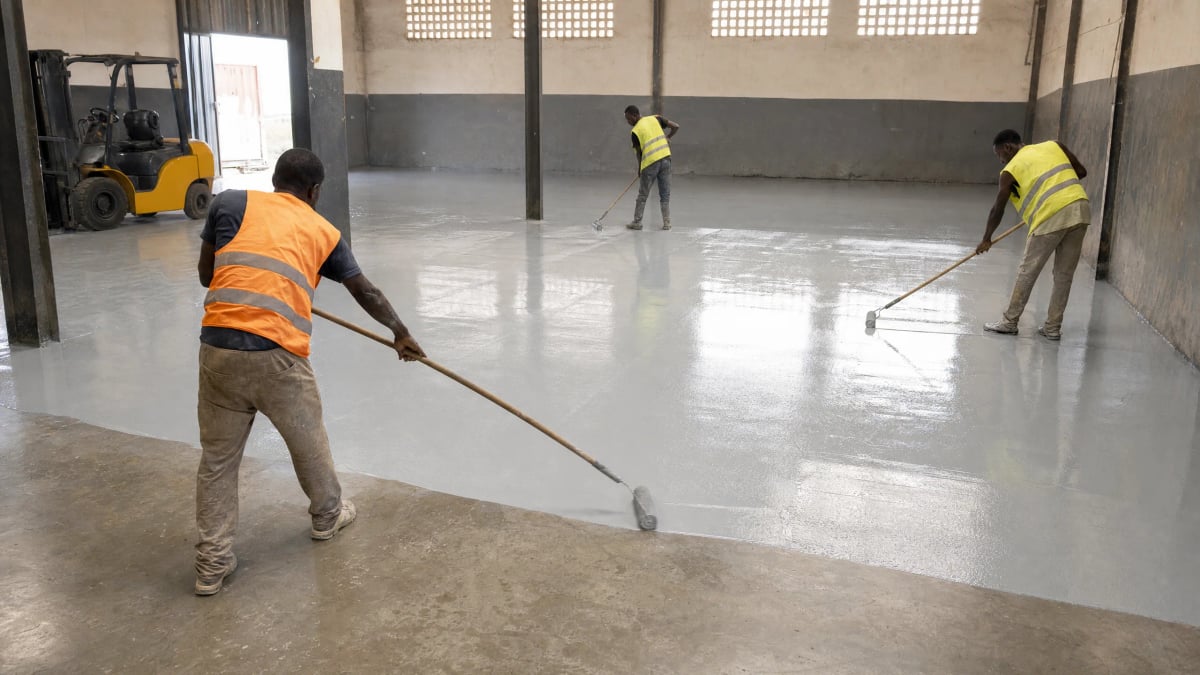
Where surface refresh is appropriate, a preparation-and-recoat cycle is deployed: mechanical diamond grinding to re-establish surface profile, targeted crack and joint remediation, and the application of a specification-matched topcoat system calibrated to the property’s specific service environment. For pharmaceutical and food-grade facilities, antimicrobial-grade topcoats and seamless cove detailing are reinstated to current regulatory standards. For logistics and warehouse floors, high-build polyurethane or broadcast-aggregate systems are refreshed to restore slip resistance and load-bearing surface integrity.
The programme is managed through a single coordinated account structure — one point of contact, unified scheduling, consolidated reporting — so that facilities directors and asset managers maintain full visibility across their entire portfolio without the administrative overhead of managing multiple supplier relationships.
Material + System Specification
- Annual surface inspection: Adhesion pull-off testing, wear-depth profiling, and photographic condition reporting per property
- Mechanical surface preparation: Diamond grinding and shot-blasting to ICRI CSP 3–5 before any recoat cycle
- Topcoat systems: Specification-matched epoxy, polyurethane, and MMA resin topcoats selected by sector and traffic classification
- Pharmaceutical and food-grade compliance: Seamless cove reinstatement, antimicrobial-grade finish layers, chemical-resistance certification
- Logistics and industrial refresh: High-build broadcast-aggregate or self-levelling polyurethane systems for heavy axle-load environments
- Portfolio documentation: Consolidated condition register, recoat history log, and lifecycle forecast issued annually per client account
Typical Project Profile
A typical programme enrolment covers between four and fourteen properties across logistics, financial-institution, and pharmaceutical sectors within the Greater Accra and Tema industrial corridors. Annual inspection cycles are scheduled during low-occupancy windows — overnight for operational warehouses, phased bay-by-bay for pharmaceutical facilities with continuous production requirements. Recoating interventions typically run two to five days per property depending on surface area and system complexity, with full cure and return-to-service protocols observed before handover.
Outcomes
- Consistent surface integrity maintained across all enrolled properties under a single specification standard
- Reactive repair incidents reduced by structured early-intervention scheduling
- Regulatory and insurance documentation maintained through consolidated annual condition reporting
- Total lifecycle maintenance cost managed predictably against a known annual programme investment
- Facilities director overhead reduced through single-account coordination and unified scheduling