Industrial Epoxy Floor Coatings
Heavy-duty broadcast and mortar-body epoxy floor coatings for factories, warehouses and processing plants across Accra, Spintex and Kumasi — specified to ICRI CSP and slab moisture testing (ASTM F2170/F1869), the discipline that prevents the
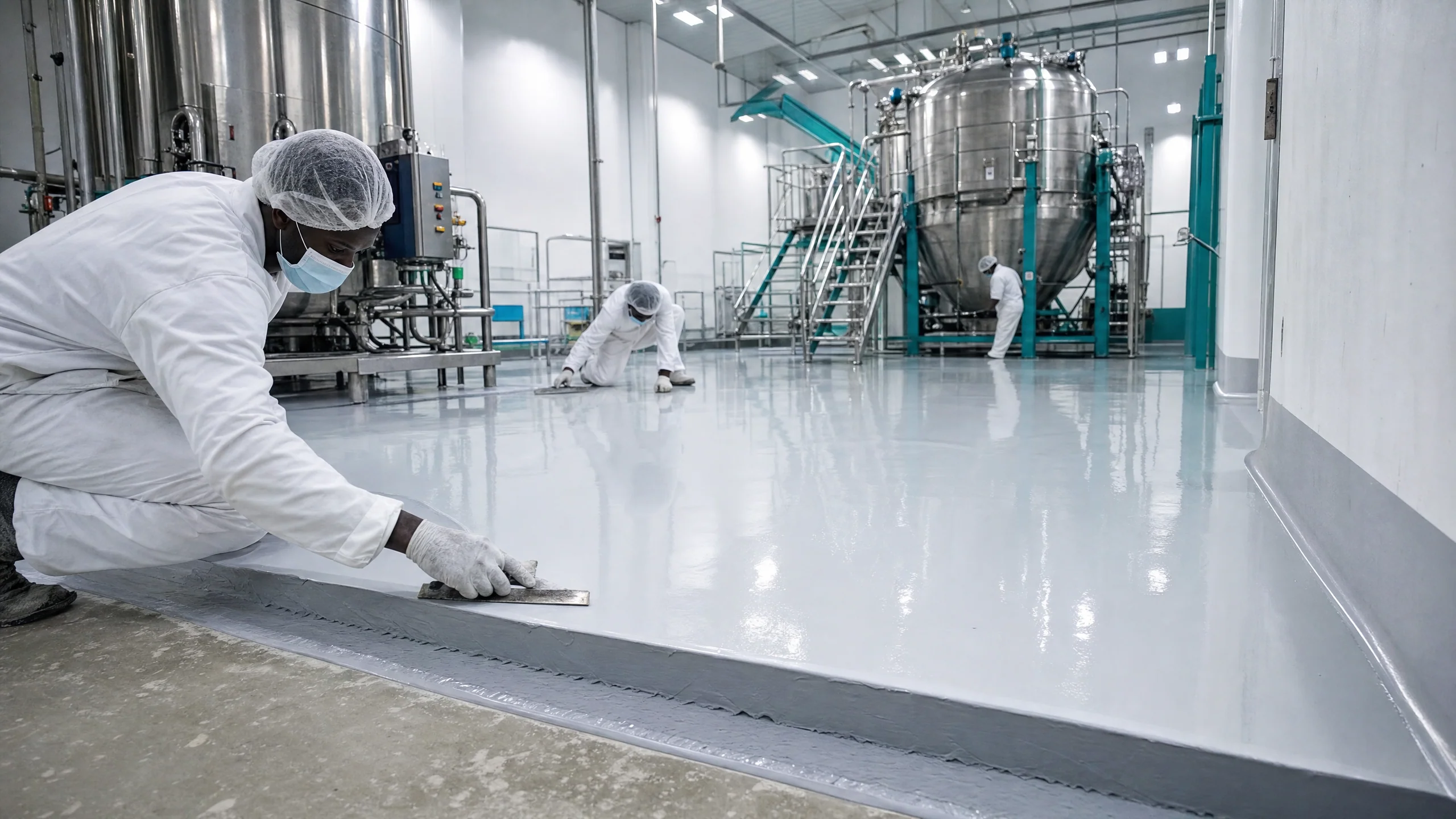
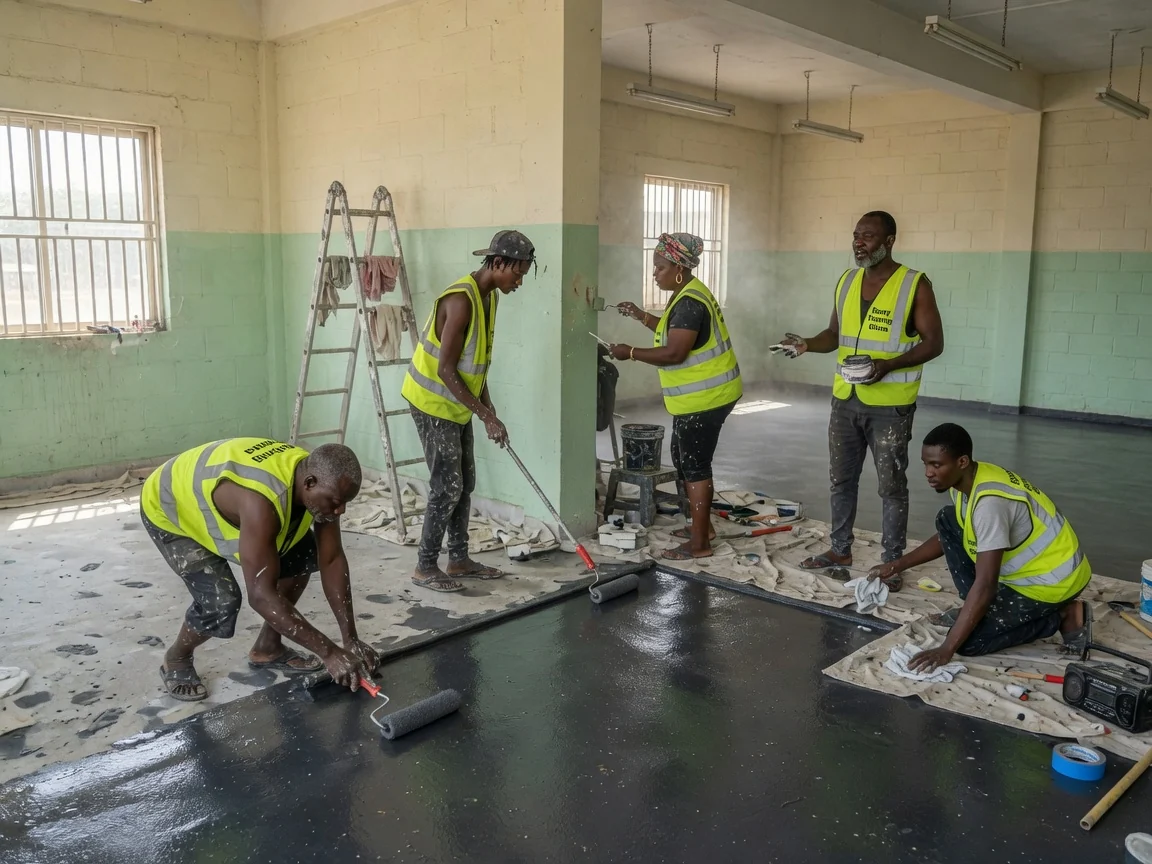
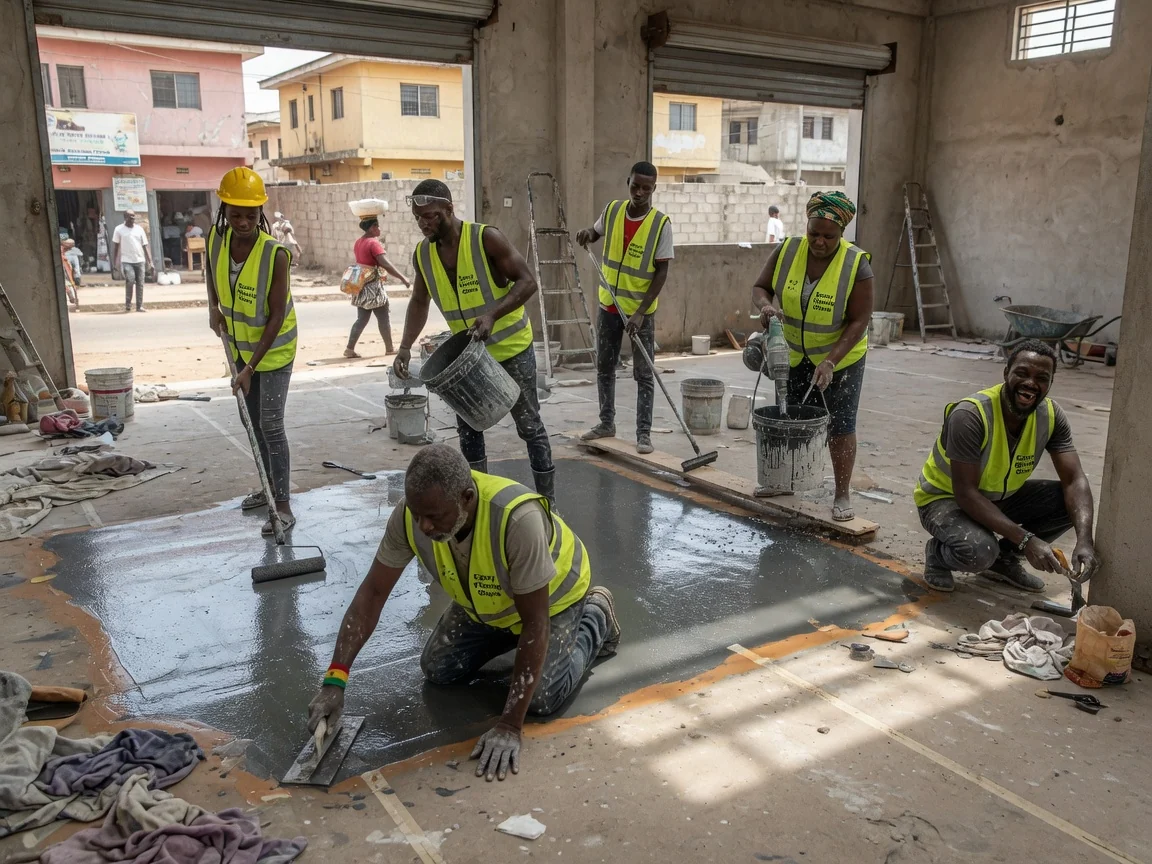
Industrial epoxy floor coating is a heavy-duty, aggregate-loaded resin system applied over a prepared concrete slab to form a seamless, chemically bonded surface that withstands forklift traffic, pallet-jack impact, chemical spillage and thermal cycling. In Ghana’s humidity its success is decided beneath the resin — by slab moisture testing and substrate preparation. Epoxy Flooring Ghana has installed industrial epoxy across Accra, Spintex and Kumasi since 1981.
Why Most Industrial Epoxy Floors Fail in Ghana — and How We Prevent It
The epoxy itself rarely fails; the slab beneath it does. In Ghana’s persistent 81–83% relative humidity, moisture vapour rising through a concrete slab builds osmotic and hydrostatic pressure under the coating and lifts it — blistering, delamination and peeling within months, even under a heavy broadcast build. It is the single most common industrial-floor failure in the country, and almost every failed floor skipped one step: slab moisture testing before the resin went down.
We treat moisture as the primary engineering control. Before a drop of resin is mixed we test in-situ relative humidity to ASTM F2170 and moisture-vapour emission to ASTM F1869, and prime to the reading. That discipline — not the brand of resin or the thickness of the build — is what makes an industrial floor last in this climate.
Industrial Epoxy Systems We Install in Accra & Kumasi
Broadcast / Quartz Epoxy
A resin base seeded with graded quartz or aluminium-oxide aggregate broadcast to refusal, then sealed — a hard-wearing, impact-resistant body for warehouses, loading bays and forklift-traffic floors where a thin coating would abrade through.
Mortar-Body (Trowel-Applied) Epoxy
A high-build, aggregate-filled mortar system for the most punishing factory environments — heavy point loads, dropped tooling and aggressive wash-down — laid to a defined thickness for maximum mechanical durability.
High-Solids Chemical-Resistant Epoxy
Formulated for resistance to acids, alkalis, fuels and solvents in processing and bunded areas, specified to the chemical exposure profile of the facility.
Anti-Slip Industrial Epoxy
Profiled broadcast systems specified to a target slip rating (EN 16165 ramp method, R9–R13) for wet-process zones, ramps and circulation where safety underfoot governs.
The Moisture-Testing Doctrine
| Test | What it measures | Why it decides the floor |
|---|---|---|
| ASTM F2170 | In-situ relative humidity (probes at 40% slab depth) | The dominant pre-install moisture test; the resin system and primer are chosen to this reading |
| ASTM F1869 | Calcium-chloride moisture-vapour emission rate | Surface vapour load; flags slabs that need a vapour-suppression primer |
| ICRI CSP | Concrete surface profile after preparation | The mechanical key the resin bonds to — concrete uses ICRI CSP, not the steel-only ISO 8501 |
How We Install an Industrial Epoxy Floor
- Slab moisture & substrate testing — ASTM F2170 in-situ RH + ASTM F1869 MVER before anything else.
- Surface preparation — diamond grinding / shot-blasting to the specified ICRI CSP (CSP 4–6 for a broadcast or mortar build); cracks and joints repaired.
- Priming & system build — moisture-tolerant primer to the reading, then the broadcast/quartz or mortar-body system at the correct film build with aggregate to refusal.
- Verification & handover — adhesion (ASTM D3359), abrasion resistance (ASTM D4060), signed QC report.
Comparing Industrial Epoxy Systems for Ghana’s Climate
| System | Best for | Lifespan | Moisture tolerance |
|---|---|---|---|
| Broadcast / quartz epoxy | Warehouses, loading bays, forklift traffic | 12–20 yrs | High when slab is tested & primed |
| Mortar-body epoxy | Heavy factory, point loads, wash-down | 15–20 yrs | High; thick monolithic build |
| High-solids chemical-resistant | Processing, bunded, chemical-exposure zones | 10–15+ yrs | High when primed to reading |
| Self-levelling epoxy | Production, assembly, lighter traffic | 10–15+ yrs | High when slab is tested & primed |
What Affects the Cost
- The system specified (broadcast, mortar-body, chemical-resistant or anti-slip) and its film build
- Slab condition and any moisture remediation or crack/joint repair required
- Area (m²), access, and whether the facility stays operational during works
- Slip rating, chemical resistance and abrasion class specified
Every quote follows a site survey and slab moisture test — no fixed rate is given before the slab is tested.
Applications Across Southern Ghana
- Warehouses, distribution centres and forklift-traffic floors across Spintex, the Accra industrial corridor and Kumasi
- Factory and general manufacturing production floors
- Food, beverage and pharmaceutical facilities requiring hygienic, wash-down-rated systems
- Chemical and processing plants requiring acid/solvent-resistant builds
- Industrial facilities in the Tema Industrial Area and the Tema Free Zones enclave
Areas We Serve
Epoxy Flooring Ghana installs industrial epoxy across Accra metro, Spintex, the North Industrial Area and Greater Accra — plus Kumasi and Takoradi.
Related Services
- Self-Levelling Epoxy Systems — seamless monolithic production floors
- Anti-Slip Epoxy Coatings — EN 16165 R-rated wet and ramp areas
- Hygienic Epoxy for Food & Pharma — seamless, coved, wash-down-rated systems
- Concrete Repair & Substrate Prep — ICRI-CSP preparation and slab remediation
Frequently Asked Questions
Why do industrial epoxy floors peel or blister in Ghana? Almost always slab moisture. In Ghana’s 81–83% humidity, trapped vapour under the resin builds osmotic and hydrostatic pressure and lifts the coating. The fix is to test in-situ RH (ASTM F2170) and moisture-vapour emission (ASTM F1869) before installation and prime to the reading — which most failed floors skipped.
What epoxy floor is best for a warehouse or factory? A broadcast/quartz or mortar-body epoxy over a moisture-tested, ICRI-CSP-prepared slab. The aggregate-loaded body carries forklift and pallet-jack impact that a thin roller coating cannot — specified to the axle load, chemical exposure and slip requirement (EN 16165 R-rating).
How long does an industrial epoxy floor last in Ghana? A correctly specified broadcast or mortar system over a moisture-tested, properly prepared slab lasts 10–15+ years; the variable is almost never the resin — it is the substrate preparation and moisture control beneath it.
How much does an industrial epoxy floor coating cost? It is quoted on survey — cost varies with the system, film build, slab condition and moisture remediation, area and access. We never give a fixed rate before testing the slab; request a site survey.