Polyurethane Topcoat Systems
UV-stable polyurethane and polyaspartic topcoats over epoxy for sun-exposed, abrasion-critical and fast-return floors in Accra & Tema — non-yellowing, thermal-shock-tolerant seals installed over a moisture-tested, ICRI-CSP-prepared base so the colour and gloss hold in Ghana's sun and humidity. Epoxy Flooring Ghana, since 1981.
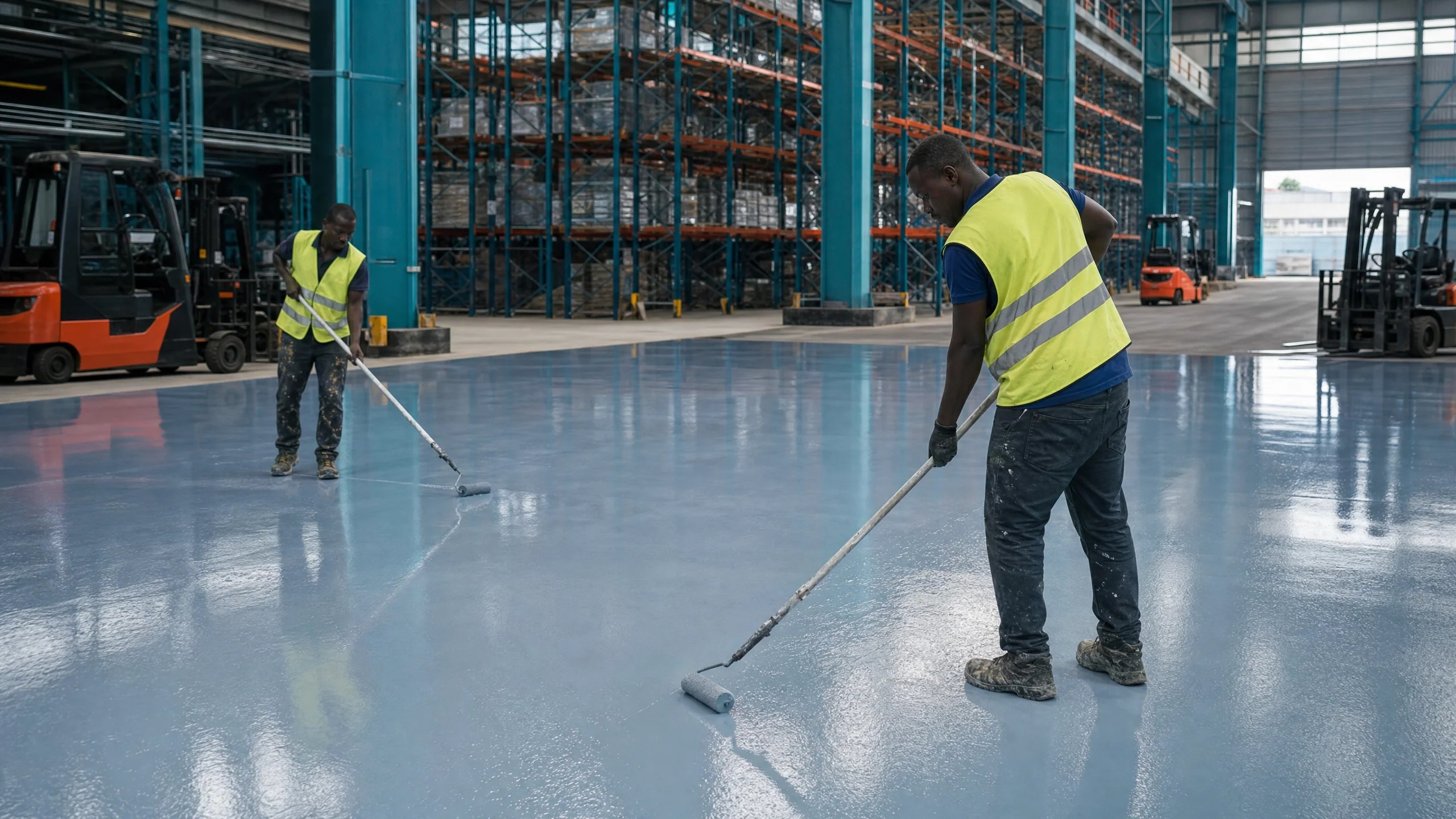
Polyurethane topcoat systems are UV-stable, abrasion-resistant finish coats — aliphatic polyurethane or fast-cure polyaspartic — applied over a cured epoxy base to resist ultraviolet degradation, thermal cycling, mechanical wear and chemical splash. In Ghana’s humidity the system is only as good as the base and slab beneath it, which is why moisture testing and substrate preparation come first. Epoxy Flooring Ghana has applied polyurethane and polyaspartic topcoats across Accra and Tema since 1981.
Why a Floor Needs a UV-Stable Topcoat in Ghana — and How We Get It Right
Two things defeat a bare epoxy floor in this country: the sun and the slab beneath it. Sustained UV ambers and chalks unprotected epoxy, while in Ghana’s persistent 81–83% relative humidity, moisture vapour rising through an untested slab builds pressure under the resin and lifts it. A UV-stable topcoat answers the first problem — but only if the second is solved first, because no topcoat saves a floor that is delaminating from beneath.
We treat moisture as the primary engineering control and the topcoat as the surface engineering. Before the system commits we test in-situ relative humidity to ASTM F2170 and moisture-vapour emission to ASTM F1869 and prime to the reading; then an aliphatic polyurethane or polyaspartic topcoat delivers the non-yellowing, hard-wearing surface the exposure demands.
Topcoat Systems We Apply in Accra & Tema
Aliphatic Polyurethane Topcoat
The non-yellowing, UV-stable workhorse for sun-exposed and high-traffic floors — atria, glazed concourses, showroom circulation and covered-but-open platforms where bare epoxy would discolour.
Polyaspartic Fast-Cure Topcoat
A UV-stable subset that cures in hours rather than days, allowing return to service overnight — the right answer for operational facilities, retail and car-park decks that cannot close for an extended programme.
Thermal-Shock & Chemical-Splash Seal
A topcoat specified for floors that see hot wash-down, temperature cycling or chemical splash, adding elasticity and chemical resistance (ASTM C267) over a hard epoxy body.
Anti-Slip Topcoat
A polyurethane seal broadcast with fine aggregate and finished to a target slip rating (EN 16165 R9–R13) for ramps, wet zones and circulation where safety underfoot governs.
Standards That Govern a Topcoat
| Standard | What it governs | Why it decides the topcoat |
|---|---|---|
| ASTM F2170 | In-situ relative humidity (probes at 40% slab depth) | The dominant pre-install moisture test; a topcoat cannot save a lifting base |
| ASTM F1869 | Calcium-chloride moisture-vapour emission rate | Surface vapour load; flags slabs needing a vapour-suppression primer |
| ASTM D4060 | Taber abrasion of the topcoat | The wear resistance that lets a topcoat outlast the traffic on it |
| ASTM D3359 | Adhesion (cross-cut / crosshatch tape) | Confirms the topcoat is keyed to the base, not merely lying on it |
| ASTM C267 | Chemical resistance of the system | Confirms the seal resists the chemical and wash-down exposure specified |
| EN 16165 (Annex B) | Ramp R9–R13 slip rating | Sets the slip rating for ramps, wet zones and circulation |
| ICRI CSP | Concrete surface profile after preparation | The mechanical key the resin bonds to — concrete uses ICRI CSP, not the steel-only ISO 8501 |
How We Apply a Polyurethane Topcoat
- Slab moisture & substrate testing — ASTM F2170 in-situ RH + ASTM F1869 MVER before the system commits.
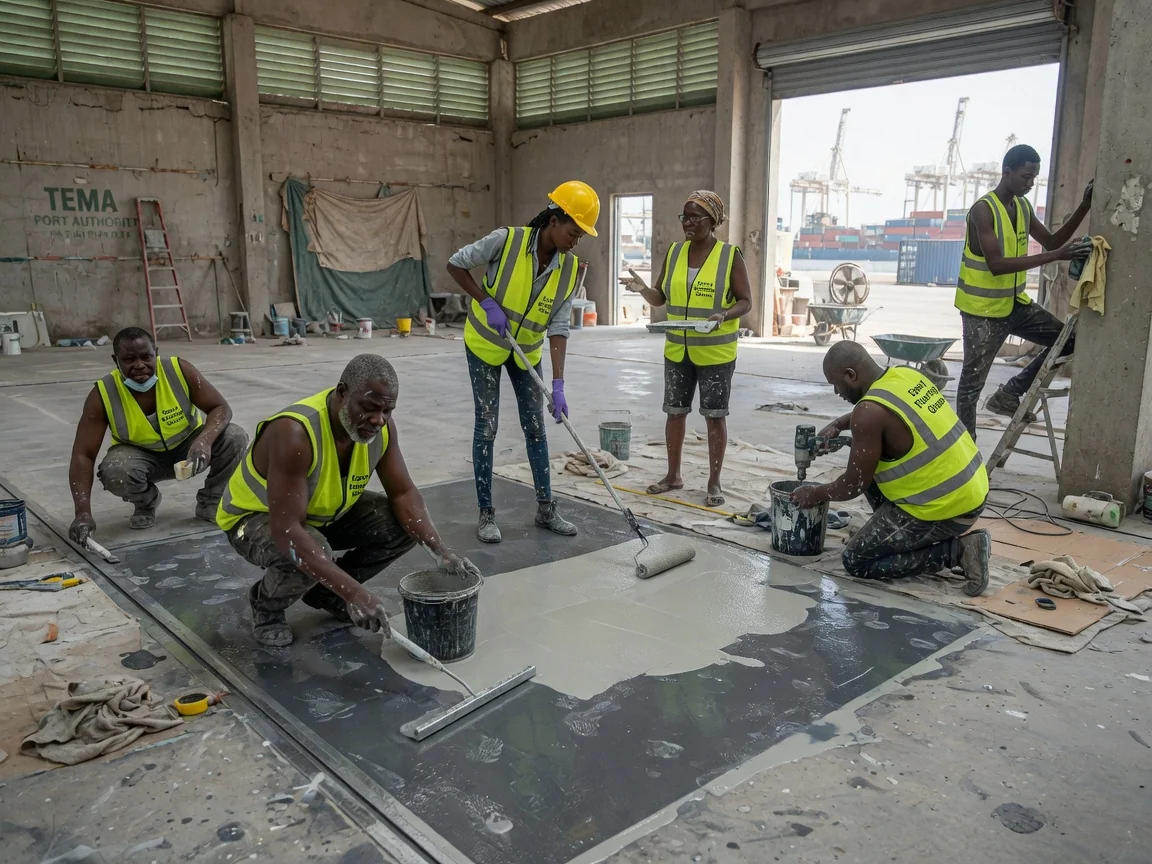
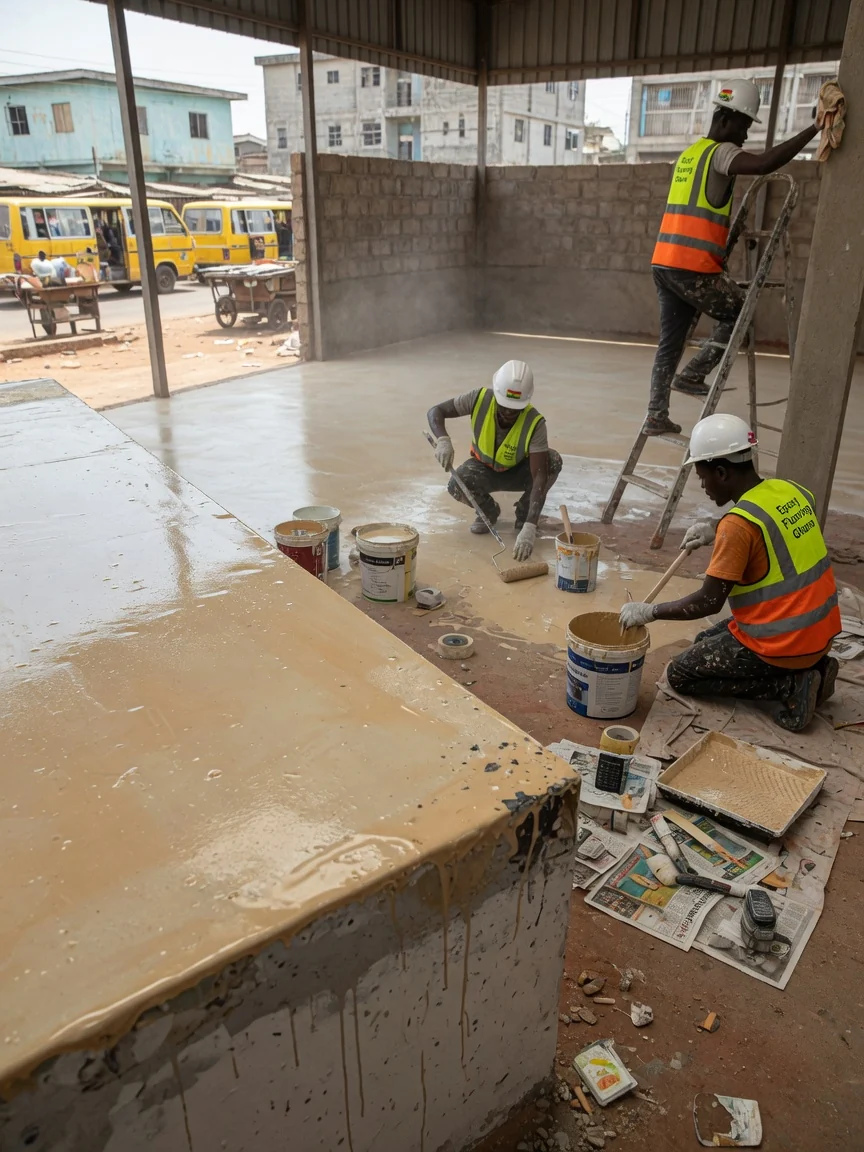
- Surface preparation — diamond grinding to ICRI CSP over new concrete, or abrasion and de-gloss over an existing epoxy base.
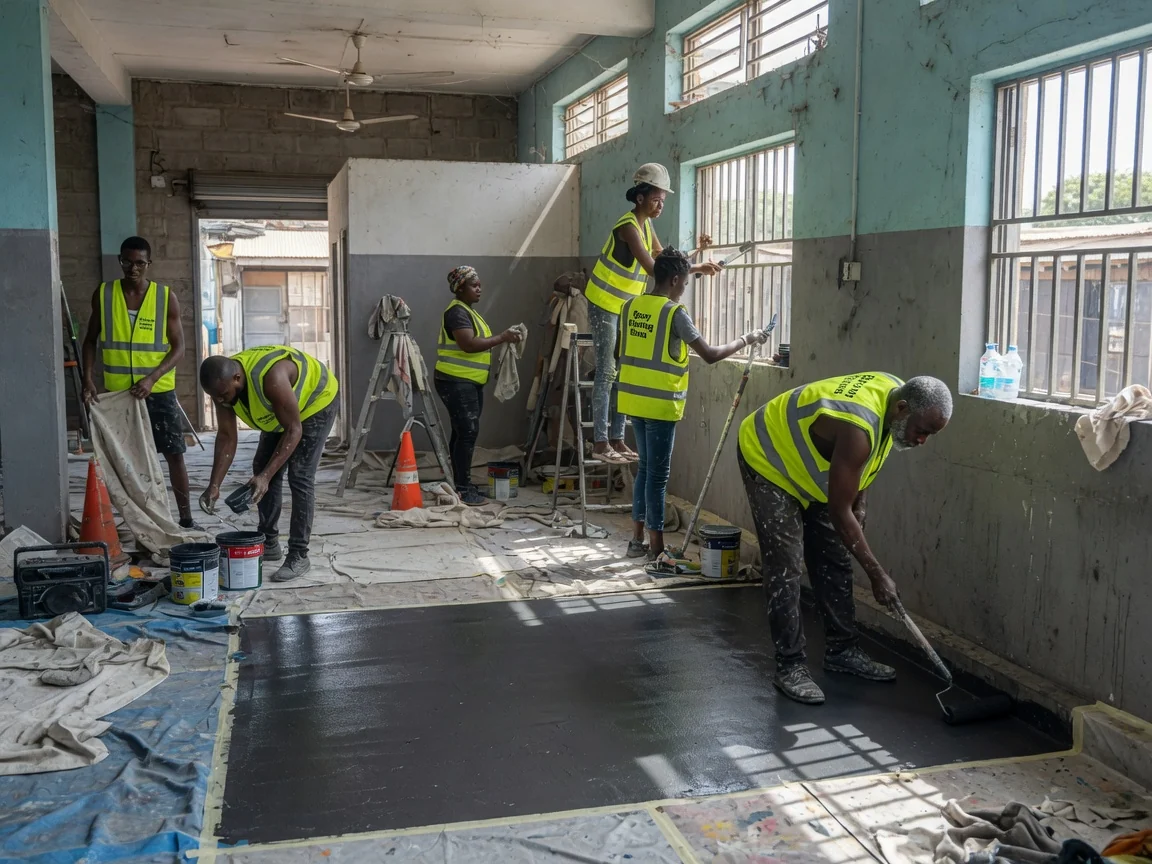
- Topcoat application — aliphatic polyurethane or polyaspartic mixed to tolerance, applied within pot life to the specified film build.
- Cure, verification & handover — adhesion (ASTM D3359), gloss and DFT checked; fast return to service with polyaspartic; signed QC report.
Comparing Topcoat Systems for Ghana’s Climate
| Topcoat | Best for | Return to service | UV / thermal tolerance |
|---|---|---|---|
| Aliphatic polyurethane | Sun-exposed, high-traffic, showroom | 1–3 days | High UV stability |
| Polyaspartic fast-cure | Operational sites, retail, car parks | Hours (overnight) | High UV; wider application window |
| Thermal-shock / chemical seal | Wash-down, temperature cycling | 1–3 days | High; elastic, chemical-resistant |
| Anti-slip polyurethane | Ramps, wet zones, circulation | 1–3 days | High UV; slip-rated finish |
What Affects the Cost
- The topcoat type specified (aliphatic polyurethane vs polyaspartic) and its film build
- Base condition — new concrete to prepare vs an existing epoxy base to abrade and de-gloss — and any moisture remediation required
- Area (m²), access, and whether the facility stays operational during works
- Slip rating (EN 16165), chemical resistance (ASTM C267) and downtime tolerance specified
Every quote follows a site survey and slab moisture test — no fixed rate is given before the slab is tested.
Applications Across Southern Ghana
- Sun-exposed atria, glazed concourses and covered-but-open platforms across Accra and Spintex
- High-traffic warehouse and logistics corridors and car-park decks in the Tema industrial area
- Showroom and retail circulation requiring a non-yellowing, hard-wearing finish
- Operational food, pharma and healthcare facilities needing fast-cure return to service
- Industrial and commercial floors in Kumasi, Takoradi, and the Tema Free Zones enclave
Areas We Serve
Epoxy Flooring Ghana applies polyurethane and polyaspartic topcoats across Accra metro, Spintex, and the Tema industrial area — plus Kumasi and Takoradi.
Related Services
- Decorative Metallic Epoxy — UV-stable topcoats are how its colour is protected
- Hygienic Epoxy for Food & Pharma — fast-cure and chemical-resistant seals for wash-down zones
- Industrial Epoxy Floor Coatings — the heavy-duty base a topcoat protects
- Concrete Repair & Substrate Preparation — the moisture-tested, ICRI-CSP base every system needs
Frequently Asked Questions
Why put a polyurethane topcoat over an epoxy floor? Epoxy is hard and chemically resistant but it ambers under UV and is less elastic under thermal shock; an aliphatic polyurethane or polyaspartic topcoat adds UV stability (non-yellowing), abrasion resistance, thermal-shock tolerance and, in the polyaspartic case, fast cure. The pairing gives a tough epoxy body with a sun-stable, hard-wearing surface — the right answer for sun-exposed and high-traffic floors in Ghana.
Will the floor yellow in Ghana’s sun? Not with an aliphatic UV-stable topcoat. Standard epoxy ambers under sustained UV, which is why we specify aliphatic polyurethane or polyaspartic seals for atria, glazed concourses and covered-but-open platforms; they hold colour and gloss where bare epoxy would discolour.
What is the difference between polyurethane and polyaspartic topcoats? Both are UV-stable and abrasion-resistant. Polyaspartic is a fast-cure subset that lets a floor return to service in hours and tolerates a wider application window, which suits operational facilities that cannot close for days; conventional aliphatic polyurethane offers a longer working time and is often specified for larger, planned installations. We select to the project’s downtime tolerance and exposure.
How much does a polyurethane topcoat cost? It is quoted on survey — cost varies with the topcoat type (polyurethane vs polyaspartic), film build, base condition and any moisture remediation, area and access. We never give a fixed rate before testing the slab; request a site survey.