Hygienic Epoxy for Food & Pharma
Seamless, antimicrobial PU and epoxy wash-down floors with integrated coved skirting for food factories, beverage lines and pharmaceutical suites in Accra & Tema — HACCP- and GMP-aligned systems installed over a moisture-tested, ICRI-CSP-prepared slab so the floor passes audit and survives Ghana's humidity. Epoxy Flooring Ghana, since 1981.
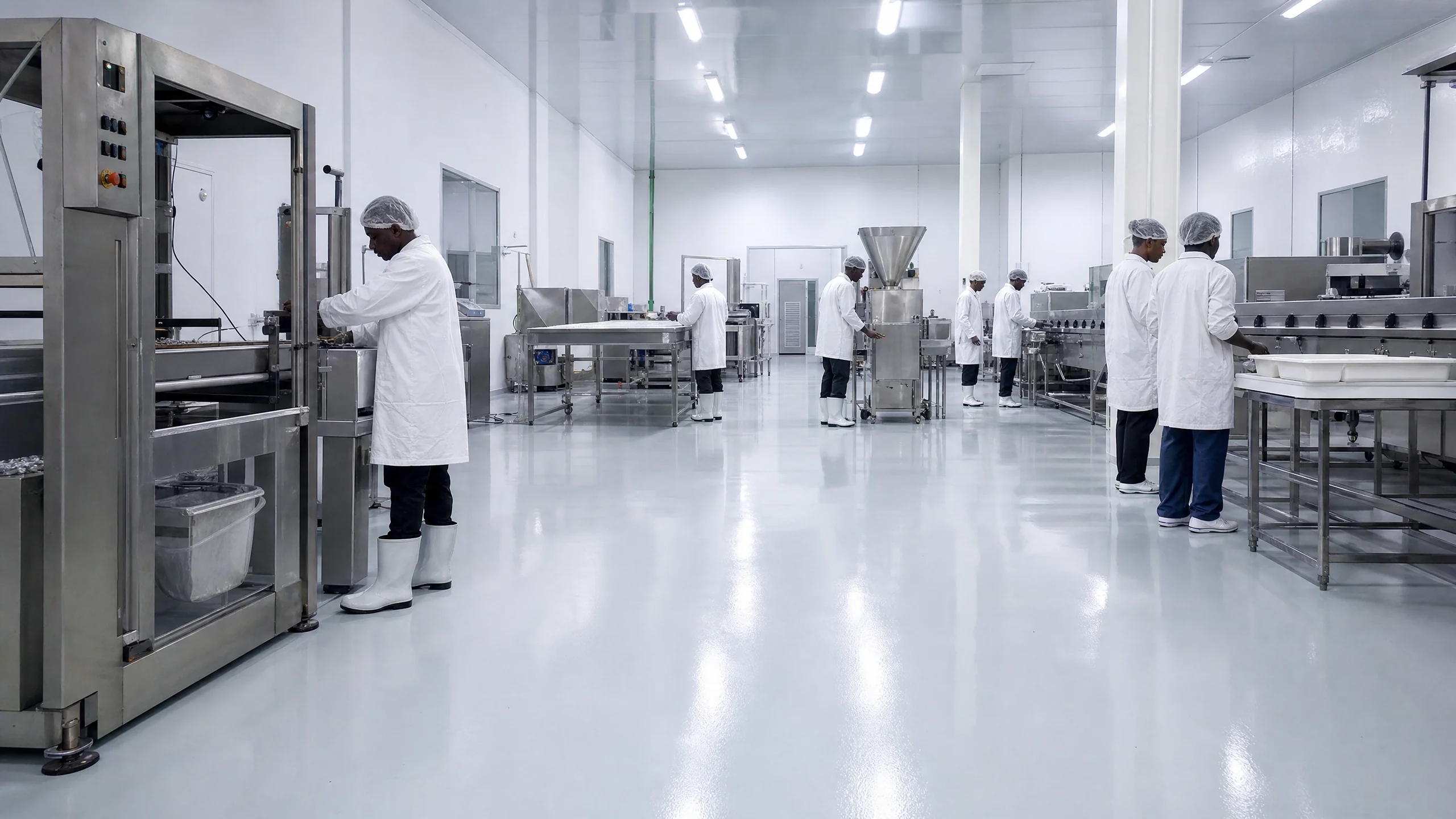
Hygienic epoxy and PU flooring is a seamless, non-porous, antimicrobial resin system with integral coved skirting, applied over a prepared slab to remove the grout lines, joints and perimeter gaps that harbour bacteria in production-critical environments. In Ghana’s humidity its success — and its auditability — is decided beneath the resin, by slab moisture testing and substrate preparation. Epoxy Flooring Ghana has installed hygienic flooring across Accra and Tema since 1981.
Why Hygienic Floors Fail in Ghana — and How We Prevent It
In a food or pharma facility a floor does not just have to look clean; it has to be validatable. And the most common reason a hygienic floor fails an audit in Ghana is the same reason every epoxy fails here: slab moisture. In the country’s persistent 81–83% relative humidity, moisture vapour rising through an untested slab builds osmotic and hydrostatic pressure under the resin and lifts it — and a lifted coating over a drain or against a coved base becomes a bacterial harbourage point overnight.
We treat moisture as the primary engineering control before a single hygienic system goes down. We test in-situ relative humidity to ASTM F2170 and moisture-vapour emission to ASTM F1869, and prime to the reading. That discipline — not the antimicrobial additive alone — is what keeps a hygienic floor seamless, sealed and audit-defensible in this climate.
Hygienic Systems We Install in Accra & Tema
Antimicrobial PU Screed (Wash-Down)
A heavy-duty, hygienic polyurethane screed for food and beverage production — thermal-shock and steam-clean tolerant, slip-rated, and the specification of record for wet-process wash-down zones.
Seamless Hygienic Epoxy
A self-levelling, non-porous epoxy with antimicrobial additive for pharmaceutical suites, packing halls and dry-process areas where a smooth, easy-clean monolithic surface is the requirement.
Integral Coved Skirting
Radius-formed coving at every wall-floor and floor-drain junction, built as one continuous element with the floor — eliminating the right-angle perimeter gaps HACCP auditors flag first.
Drainage & Fall Detailing
Falls to drain, recessed drain collars and sealed channel surrounds integrated into the system so wash-down water clears the floor without ponding against equipment or walls.
Standards That Govern a Hygienic Floor
| Standard / framework | What it governs | Why it decides the floor |
|---|---|---|
| ASTM F2170 | In-situ relative humidity (probes at 40% slab depth) | The dominant pre-install moisture test; a lifted hygienic floor is a contamination risk |
| ASTM F1869 | Calcium-chloride moisture-vapour emission rate | Surface vapour load; flags slabs needing a vapour-suppression primer |
| ASTM C267 | Chemical resistance of the system | Confirms the floor resists the caustic and acidic wash-down agents used in production |
| EN 16165 (Annex B) | Ramp R9–R13 slip rating | Sets the wet-process slip rating that keeps wash-down areas safe underfoot |
| ICRI CSP | Concrete surface profile after preparation | The mechanical key the resin bonds to — concrete uses ICRI CSP, not the steel-only ISO 8501 |
| HACCP / GMP | Food-safety and good-manufacturing frameworks | The audit framework the seamless, coved, documented floor is engineered to support |
How We Install a Hygienic Food & Pharma Floor
- Slab moisture & substrate testing — ASTM F2170 in-situ RH + ASTM F1869 MVER before anything else.
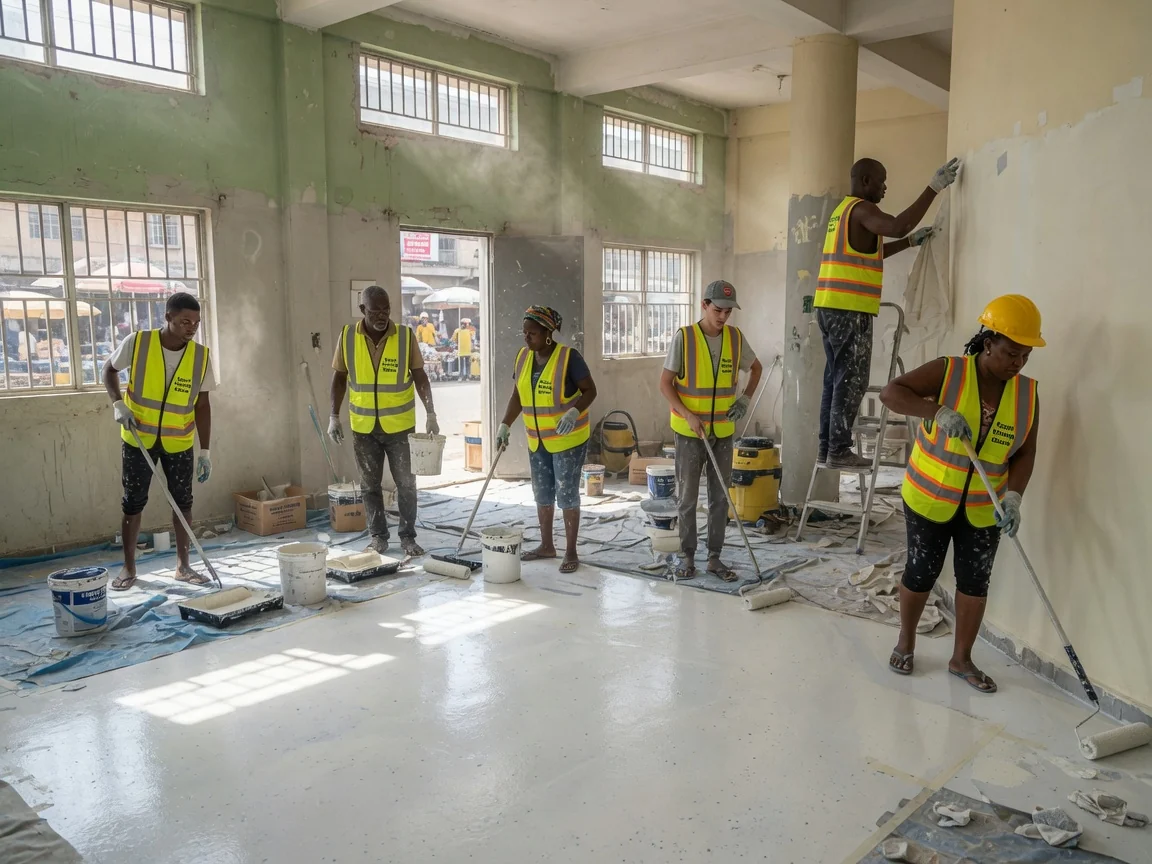
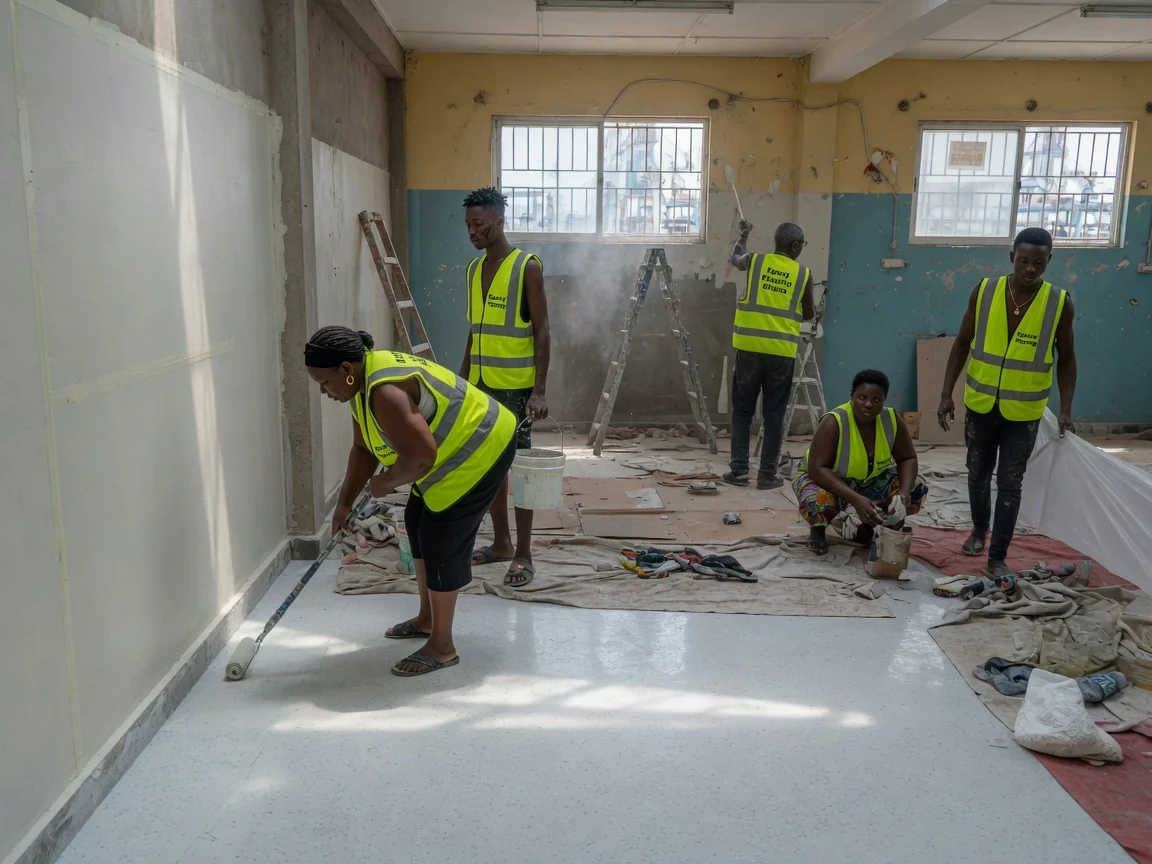
- Surface preparation & coving formwork — diamond grinding / shot-blasting to the specified ICRI CSP; drains detailed; coved-base formwork set at every junction.
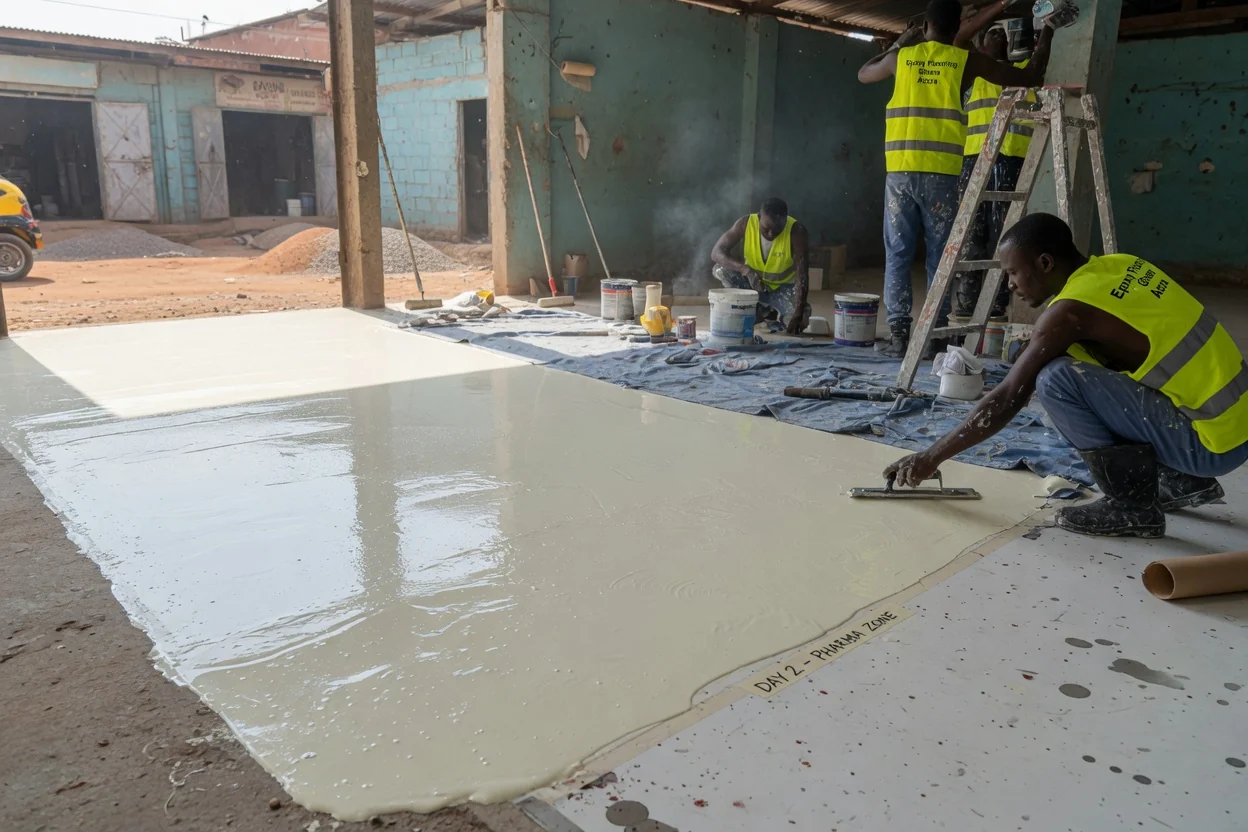
- Priming & antimicrobial system build — moisture-tolerant primer to the reading, then the seamless PU/epoxy body coat with integral coving at the specified thickness and slip rating.
- Verification & audit-ready handover — adhesion (ASTM D3359), chemical resistance (ASTM C267), HACCP/GMP-ready handover dossier.
Comparing Hygienic Floor Systems for Ghana’s Climate
| System | Best for | Lifespan | Moisture / thermal tolerance |
|---|---|---|---|
| Antimicrobial PU screed | Food/beverage wash-down, thermal shock | 15–20 yrs | Highest; tolerates wet & thermal cycling |
| Seamless hygienic epoxy | Pharma suites, packing, dry process | 10–15+ yrs | High when slab is tested & primed |
| Epoxy + PU hygienic topcoat | Mixed wet/dry zones, easy-clean | 12–18 yrs | High; chemical & abrasion resistant |
| Coved epoxy (light hygiene) | Labs, ante-rooms, low-duty hygiene | 10–15 yrs | High; smooth, sealed, coved |
What Affects the Cost
- The system specified (antimicrobial PU screed vs seamless hygienic epoxy) and its thickness
- Length of coved skirting, number of drains and fall detailing required
- Slab condition and any moisture remediation or crack/drain repair required
- Area (m²), access, whether the facility stays operational, and the slip rating (EN 16165) and chemical resistance (ASTM C267) specified
Every quote follows a site survey and slab moisture test — no fixed rate is given before the slab is tested.
Applications Across Southern Ghana
- Food and beverage factories, bakeries and bottling lines across Accra and the Tema industrial area
- Pharmaceutical tableting and packing suites, clean-room ante-chambers and laboratory environments
- Dairy plants, abattoirs and cold-store facilities requiring wash-down, thermal-shock-tolerant systems
- Hospital central sterile supply departments and healthcare wet areas
- Agro-food and pharma facilities in the North Industrial Area and along the Spintex corridor
Areas We Serve
Epoxy Flooring Ghana installs hygienic food and pharma flooring across Accra metro, Spintex, and the Tema industrial area — plus Kumasi and Takoradi.
Related Services
- Polyurethane Topcoat Systems — thermal-shock and chemical-resistant seals for wash-down zones
- Static-Dissipative (ESD) Epoxy — for pharma clean-rooms and electronics-adjacent labs
- Industrial Epoxy Floor Coatings — for the heavy-plant and warehouse zones of the same facility
- Concrete Repair & Substrate Preparation — the moisture-tested, ICRI-CSP base every hygienic floor needs
Frequently Asked Questions
What flooring is best for a food factory or pharmaceutical facility in Ghana? A seamless, antimicrobial PU screed or epoxy system with integral coved skirting at every wall-floor junction — installed over a moisture-tested, ICRI-CSP-prepared slab and finished to a wash-down slip rating (EN 16165). It removes the grout lines and perimeter gaps that HACCP and GMP auditors cite as the primary contamination vectors, and it is the specification of record for FDA-Ghana-licensed sites.
Why do hygienic floors fail in Ghana? The same reason every epoxy fails here — slab moisture. In Ghana’s 81–83% humidity, untested slab vapour builds pressure and lifts the coating, and a lifted coating in a wet-process area becomes a bacterial harbourage point overnight. We test in-situ RH (ASTM F2170) and vapour emission (ASTM F1869) and prime to the reading before any resin goes down.
Is the floor HACCP and GMP compliant? The floor is engineered to support HACCP and GMP compliance: seamless and non-porous, coved at every junction, chemically resistant to wash-down agents (specified to ASTM C267), and documented with a handover dossier for inspection. Compliance is a whole-facility outcome; the floor is the part we make audit-defensible.
How much does a hygienic food/pharma floor cost? It is quoted on survey — cost varies with the system (PU screed vs epoxy), thickness, coving length, drain detailing, slab condition and any moisture remediation, area and access. We never give a fixed rate before testing the slab; request a site survey.